Just a quick heads up – some of the links I share on this site are affiliate links. That means if you click on one and make a purchase, I may earn a small commission at no extra cost to you. Your support through these links helps me create valuable content.
I’ll tell you something most Malta travel guides won’t: if beaches are the main reason you’re going, you’d probably be happier in Greece or Croatia. What Malta is genuinely excellent is history, diverse nature, water sports and friendly people.
The dark, steep drama of Dingli Cliffs in the west, lighter limestone in the south, flat open east coast, sheltered bays in the north. It’s 7,000 years of history you can walk through, water clear enough to see 30 to 50 metres down, and village festas where people watch the fireworks with the same intensity every single year.
What to do in Malta depends entirely on what kind of traveller you are. This guide gives you the honest version.

Written by Laura Jasenaite, Malta travel expert with 15+ years living on the islands.
Explore Malta’s Stunning Beaches
Malta’s beaches are not its strongest card. The sandy ones — Ghadira in the north, Golden Bay in the west — are perfectly good, wide and accessible, with sunbeds and food nearby. If you come in summer expecting to find quiet, you won’t.
What I actually love about swimming in Malta is different. Almost every rocky coastline on the island has ladders into the sea, put in every June and removed in October.
My local spot is the rocky coast in Sliema, on the open water side close to Exiles. In summer it is quiet enough to have a stretch of rock to yourself, the visibility is extraordinary, and if you are patient and lucky you might see an octopus. I have also seen a turtle there once.
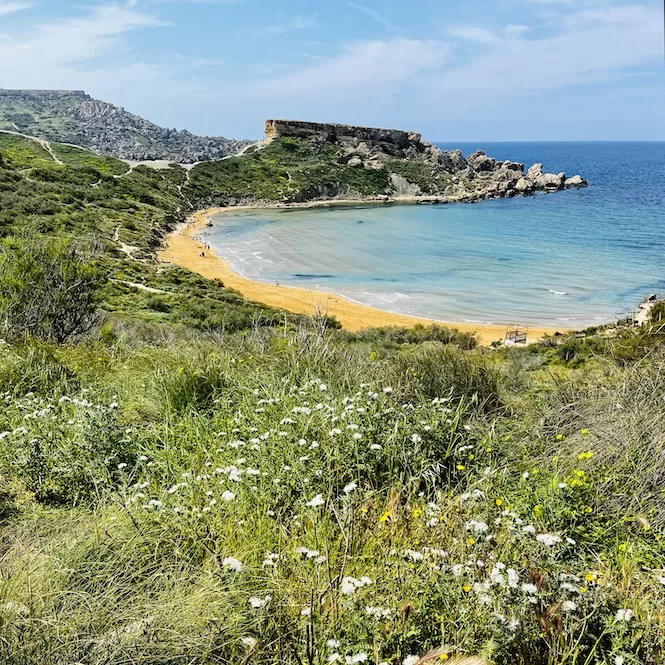
If you want a proper beach, go to Għajn Tuffieħa. It is still crowded but less so than the big sandy ones, and there is good snorkelling along the rocky sides. The sand is bright yellow, the cliffs come down on both sides, stingrays move through the water if you look carefully. One thing to know: there are a lot of steps down and back up. If you have a pushchair or any mobility issues, Ghadira is the more practical choice because it’s accessible from the road.
Avoid swimming in the Grand Harbour and port areas. Everywhere else, if the sea is calm, the water is yours. For a full overview of every beach, see the Malta beaches map.
| Beach Name | Location | Highlights |
| Ramla Beach | East of Gozo | Red sandy beach, shallow waters, natural surroundings, family-friendly, water sports. |
| St. Peter’s Pool | South of Malta | Natural swimming pool, rocky beach, clear waters, popular for cliff jumping. |
| Hondoq Bay | South of Gozo | Crystal clear water, views of Comino with a spot for jumping and water sports. |
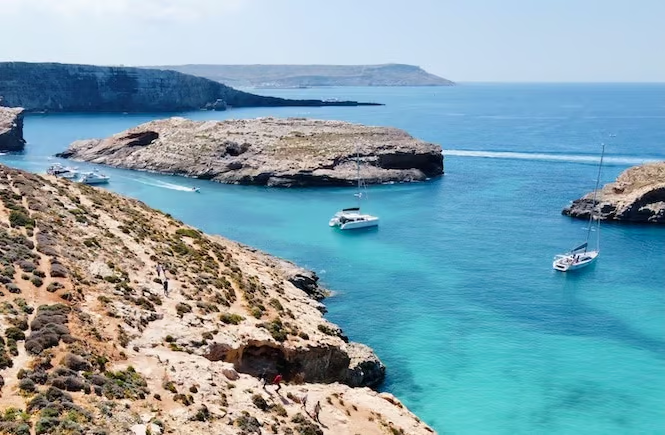
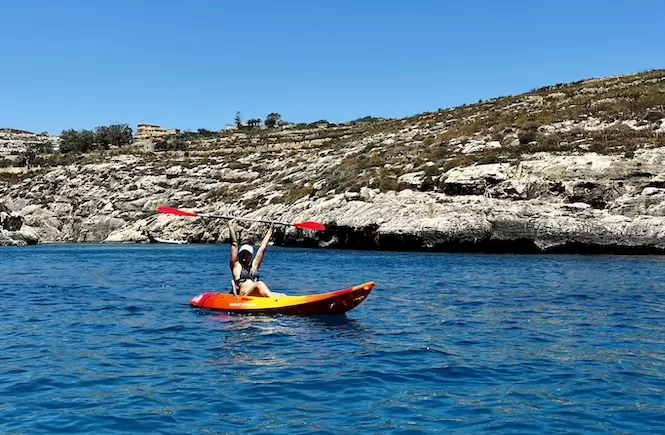
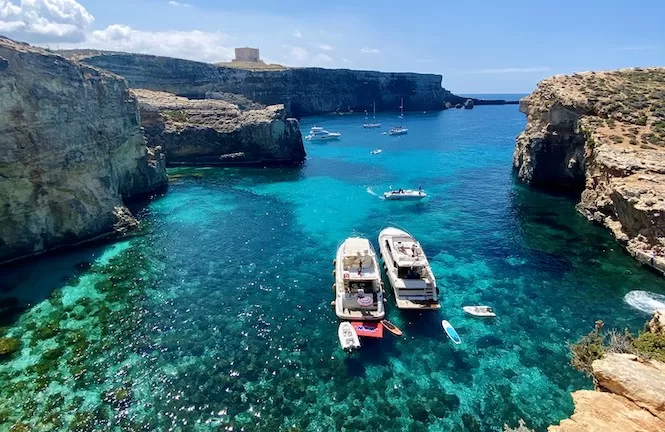
| Blue Lagoon & Comino | Comino | Small beach, clear turquoise waters, good for snorkelling, kayaks for rental, and nearby hiking trails. Check out my top recommended boat tours to Blue Lagoon. |
| Golden Bay | West of Malta | Large sandy beach, family-friendly, water sports, nearby amenities. |
| Ghadira Bay | North-East of Malta | Malta’s largest sandy beach, shallow waters, accessible, family-friendly, water sports. |
| Ghajn Tuffieha Bay | West of Malta | Scenic views, less crowded, good for hiking and watching sunsets. |
| Paradise Bay | North-West of Malta | Small beach, clear turquoise waters, good for snorkelling, kayaks for rental, nearby hiking trails. |
| Imgiebah Bay | North-East of Malta | Wild beach, dog friendly, no amenities. |
| Ghar Lapsi | South-West | Natural pool, shallow, good for kids. |
Malta’s 7,000 Years of History: What You’ll Feel When You’re There
Most island destinations have a historical timeline you can read on a plaque. Malta has one you walk through. The prehistoric temples here were built around 3600 BC, which makes them older than Stonehenge and the Egyptian pyramids. The Arab period, the Romans, two centuries of Knights of St. John, the British, the Second World War: all of it left physical marks on this small island, and almost all of those marks are still there.
What gets me is Valletta. After the Great Siege of 1565, when Grand Master Jean de Valette and a small defending force held off the Ottoman Empire for nearly four months, the Knights raised an entirely new capital city from scratch on a bare limestone peninsula. The grid of streets, the palaces, the harbour fortifications: one of the most deliberate planned cities of its era. That city is still the capital, with people living in those same buildings four and a half centuries later.
What makes Malta unusual is how many layers you can read at once. The Maltese language itself is a mix of Arabic, Sicilian, Italian and English — you hear the Arab and Norman periods every time someone speaks. Valletta gives you the Knights. Mdina gives you the Arab and medieval period. The Three Cities across the harbour give you the oldest Maltese urban history. They’re all within thirty minutes of each other.
Valletta
Valletta is compact enough to cover in a morning, but worth a full day. Upper Barrakka Gardens gives you the Grand Harbour view that every Malta photograph tries to capture. St. John’s Co-Cathedral hides one of the most dramatic Baroque interiors in the Mediterranean behind an entirely unremarkable facade, make sure you go in. The Lascaris War Rooms, cut into the bastions underground, were Allied headquarters during the WWII siege and the invasion of Sicily. They’re small, slightly cramped, and very good.
Mdina and the Three Cities
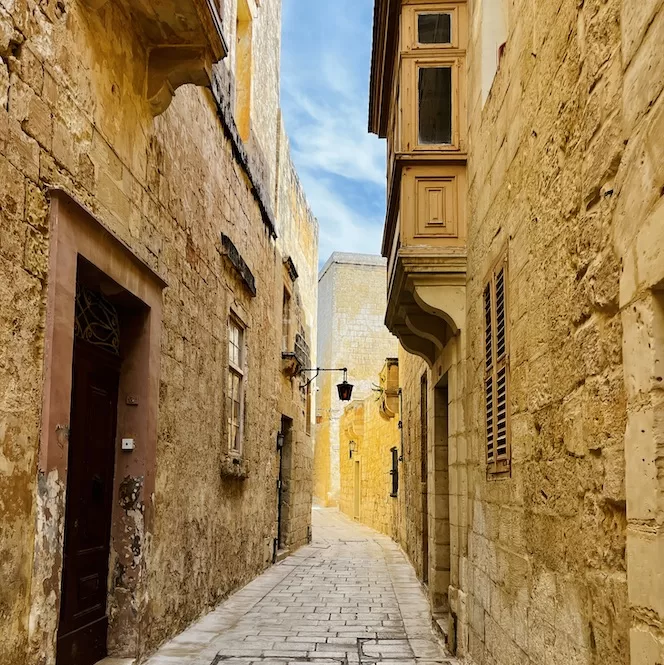
Mdina is the old walled capital: narrow streets, almost nobody living there, quiet to the point of eerie. Come before 10am. The Three Cities — Vittoriosa, Senglea, and Cospicua — sit across the Grand Harbour from Valletta and are where the Knights actually lived before Valletta was built. Far fewer visitors than Valletta, stronger sense of everyday Maltese life, and the views back to Valletta from the Senglea bastions are genuinely better than the view from Valletta itself.
Malta in the Second World War
Malta was among the most intensively bombed places in WWII. The island received the George Cross collectively in 1942. The War Museum in Valletta covers this clearly. Across Malta, rock shelters cut during the bombing are open to visit. In Mosta, the Rotunda church dome has its own WWII story: a bomb fell through it during Mass in 1942 and failed to detonate. The bomb is still on display inside the church.
Malta’s Natural Wonders and Best Coastal Walks
Malta isn’t a dramatic hiking destination. The island is small, the terrain is limestone, the highest point is just under 300 metres. What it has is a coastline that changes character completely depending on which direction you’re facing, and enough walking paths to keep you occupied for a week or more.
Dingli Cliffs
Standing at Dingli Cliffs on a rough day in winter is one of those moments that resets your sense of scale. The cliffs drop steeply to the sea. Filfla Island sits out in the water, small and unreachable. The waves come in hard and you understand, at least briefly, that you are a small person in comparison to something much bigger.
The Rocky Coast and Swimming Spots
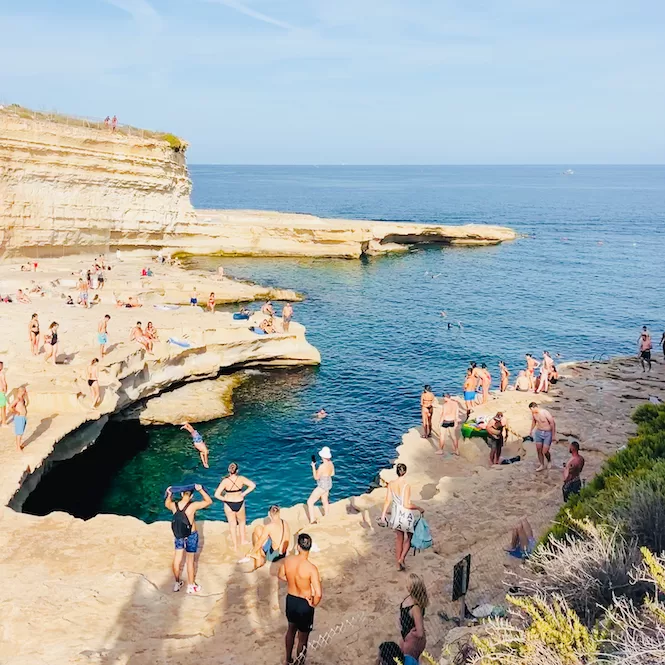
For swimming off rock rather than sand, Peter’s Pool near Marsaxlokk in the south is one of the best spots on the island: natural rock pool popular for cliff jumping.
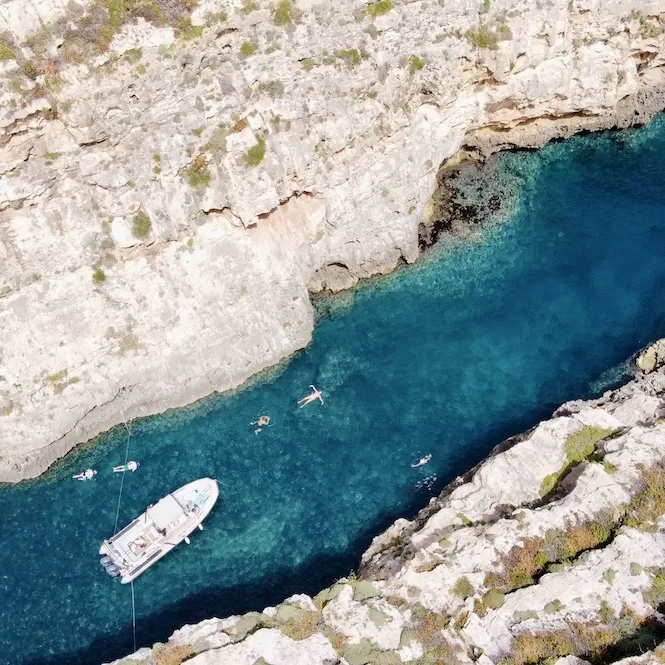
The Blue Grotto on the south coast is worth the boat trip for the cave reflections, especially in the morning.
For water sports, most operators are based around Mellieha in the north, and Marsaskala in the south. Scuba diving is particularly good around Malta: the water is clear, there are several wrecks, and the Blue Hole near Dwejra in Gozo is one of the best dive sites in the Mediterranean.
Visit Gozo: Malta’s Quieter Sister Island
Gozo is less developed than Malta, and that’s exactly why it’s worth the trip. Less development means more nature, quieter roads, fewer crowds. The island feels slower, not in a frustrating way, but in the way that reminds you what a holiday is supposed to feel like. If you want nightlife, Gozo won’t give you much. If you want a few days to genuinely slow down, it’s one of the best places I know for it.
What I love most about Gozo are the farmhouses. Across the island, old stone farmhouses have been converted into holiday rentals with private pools. They’re proper houses: thick limestone walls, shaded courtyards, completely private. Spending two or three days in a Gozo farmhouse is a completely different experience from a hotel in St Julian’s, and it’s often comparable in price. If you’re coming for a week or longer, I’d seriously consider splitting the trip – Malta for the history, Gozo for the quieter time.
What to see: the Ggantija temples outside Xaghra are the oldest freestanding stone structures in the world, older than the Maltese mainland temples, and they’re rarely crowded. The Citadella in Victoria costs nothing to walk around and gives you the view across the whole island. Gozo is small enough to cover in a day trip, but it genuinely rewards staying overnight.
Dwejra Bay, Gozo
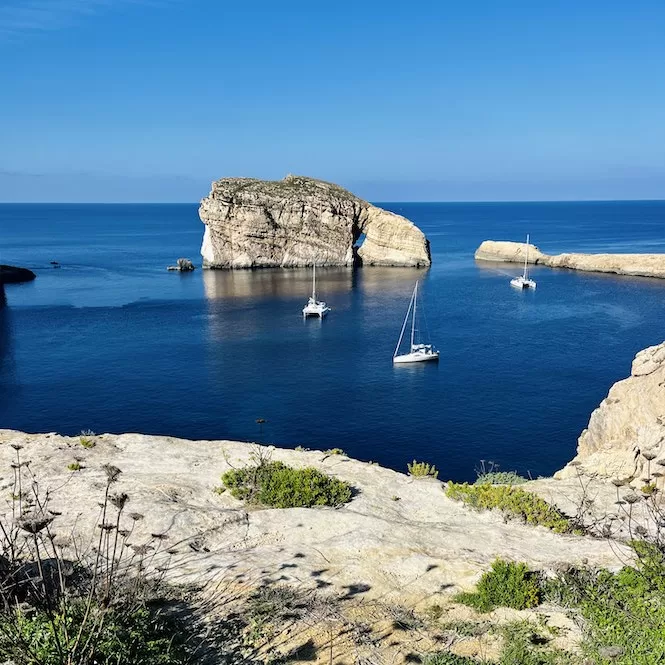
The Azure Window collapsed in March 2017. It is gone. What remains at Dwejra is still one of the most remarkable nature spots in these islands, and most people who go are surprised by how much is still there.
The Inland Sea is a lagoon connected to the open water through a tunnel in the rock. Boathouses line the edge, painted in colours. You can swim in it, dive in it, or take a small boat through the cave to the open sea outside, not expensive, and worth doing once.
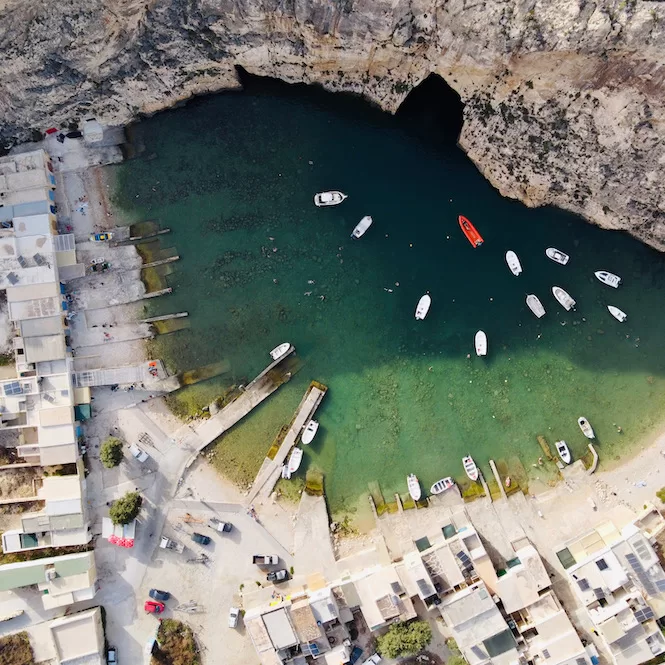
On the other side of the headland is the Blue Hole: a natural pool with an opening that leads out to the open sea below. The light comes in bright through that opening. It is one of the best snorkelling spots I know. In the evening, at sunset, the whole bay turns a colour that is difficult to explain. Go to Dwejra. The window is gone, but the place is not.
How to Get to Gozo
The ferry from Cirkewwa (northern Malta) runs frequently and takes about 25 minutes to Mgarr in Gozo. The crossing is included in the Tallinja card if you’re using public transport. To get around Gozo once you’re there, a hire car is worth it — the island is small but the bus service is limited.
Day trips from Malta work, but if you want to see Dwejra at sunrise or spend an evening in a local village square, staying overnight changes the experience completely.
The Village Festas and Malta’s Cultural Events
The village festas are where Maltese summer actually lives. Every parish has one, held in June, July or August on the feast day of their patron saint. The week builds up to the main day: outdoor concerts by competing brass bands, streets decorated in the parish colours, and on the final night, fireworks. Not a fireworks display. A competition. Different parishes have rival firework factories and rival bands, and the rivalry between them is completely real and taken seriously by everyone involved.
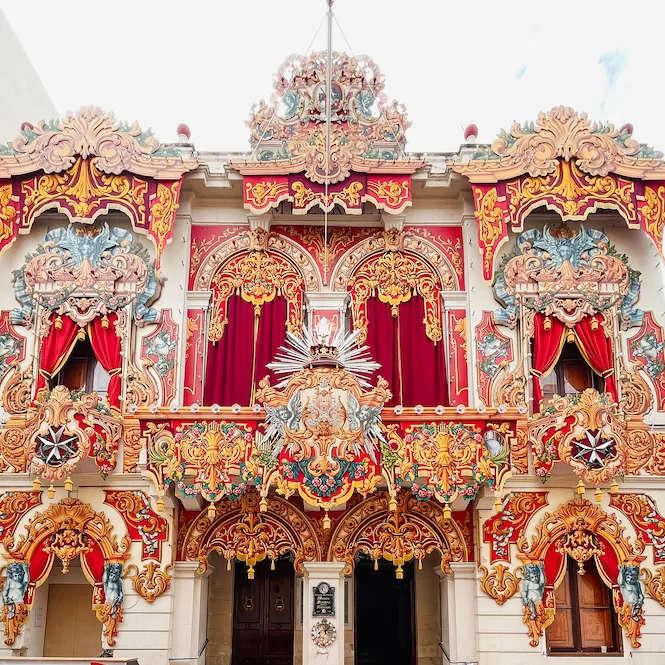
The format is more or less the same wherever you go: the statue of the patron saint is carried through the streets in a candlelit procession, the band plays, the square fills up. What changes is the character of each village. Some festas are enormous, like the festa of St. George in Victoria, Gozo, which fills the whole town. Others are small enough that you end up the only tourist at a table of locals. The small ones are usually better.
If you want to find out which festa is happening while you’re visiting, the Malta Facebook events page is actually the most reliable way to check. Alternatively, ask at wherever you’re staying: locals always know.
Major Annual Events
Beyond the village festas, Malta has a calendar of cultural events that run year-round. The ones worth planning around:
The Feast of St. Paul’s Shipwreck (February, Valletta) — one of the biggest celebrations in the capital, marking the shipwreck of St. Paul on Malta in 60 AD. Large street processions, elaborate church decorations.
The Valletta Baroque Festival (January) — two weeks of baroque music performed in historic Valletta venues. Well curated, genuinely good, and the settings are hard to replicate anywhere else.
Isle of MTV Malta (June, Floriana) — a free outdoor concert that draws major international acts. Enormous crowds, but if you’re already in Malta in June it’s worth going.
The Birgufest (October, Vittoriosa) — one night when the Three Cities switch off the electric lights and illuminate the medieval streets entirely by candlelight. Understated, atmospheric, one of the best things Malta does.
The Malta Arts Festival (July) — a mix of theatre, music, dance and visual art across Valletta venues.
Notte Bianca (October, Valletta) — one night when most of Valletta’s cultural venues open late and free. Crowded, but the access to buildings that are normally closed makes it worthwhile.
Malta’s Nightlife: Who It’s For
Paceville in St Julian’s is the main nightlife hub, and it’s worth being direct about what it is: loud, busy at weekends, the streets have the smell that comes with serious late-night foot traffic, and it’s built for people who want to be out until 4am. If that’s you, it delivers. The clubs are real clubs, the summer beach parties are genuinely good, and the concentration of bars means you can find something at any hour.
If it’s not you, don’t feel obliged to go. The honest answer is that Paceville is mostly for young travellers who want to party, and if that’s not your scene there are better ways to spend a Malta evening. A drink at one of Valletta’s rooftop bars with the Grand Harbour below, sitting outside a bar in the old part of Sliema, or just joining the evening passeggiata in any of the old towns. In summer the temperature drops after sunset, town squares fill up, families come out. It’s not nightlife in the Paceville sense, but it’s how most people actually enjoy Malta evenings.
For a full guide to what St Julian’s offers beyond the clubs, including where to eat and where to stay, read my complete St Julian’s guide.
Where to Stay in Malta: Hotels and Resorts
Malta’s main concentration of hotels is in St Julian’s and Sliema. Both are well located for getting around, sit on the coast, and have the most options at the higher end. The large international properties here are genuinely good – proper amenities, pool access, and sea views if you pick the right room.
One practical note: if you’re staying anywhere north of Valletta, a hire car makes a real difference. Malta is small but the buses are slow and infrequent, and the south and west of the island — where most of the best scenery is — takes long enough by public transport that you feel it across a week. For Gozo especially, renting a car gives you access to parts of the island the day-trippers miss.
If you’re looking for a luxurious holiday in Malta, you’re in luck. This island is packed with nice resorts and spas. Check out my comprehensive guide to 5-star hotels in Malta and Gozo.
Luxury Hotels in St Julian’s
St Julian’s shines as a top town in Malta, famous for its buzzing vibe and beautiful sea views. The resort town is home to a wide array of luxury hotels and resorts, such as InterContinental Malta and Hilton Malta. They offer outdoor and indoor pools and spas that are out of this world.
Countryside Retreats
If you prefer a quiet environment, Malta offers several countryside retreats. In Attard, the Corinthia Palace Hotel & Spa has a picturesque garden setting and a range of spa treatments, including hot stone massages and hydrotherapy.
Over on Gozo Island, the Kempinski Hotel San Lawrenz in the pretty village of San Lawrenz mixes adventure and luxury. You can hike, dive, snorkel, and relax in the spa.
Who Is Malta Actually For?
History lovers: yes, absolutely. The Knights of St John, the Siege of Malta, the prehistoric temples, the layers of occupation – there is enough here to spend two weeks and not run out. Come in the cooler months, October to May. Read the full guide to the best time to visit Malta before you book. Come in March if you can: the island is green, the wildflowers are out, the walking is good and the light is extraordinary.
Hikers and nature people: yes, but avoid summer. Between June and mid-September the heat between 11am and 4pm is genuinely difficult. The same walks that are wonderful in March are brutal in August.
Divers and snorkellers: Malta is one of the best places in the Mediterranean, any time of year. The water is clear enough to see 30 to 50 metres, there are good reefs and shipwrecks accessible at all skill levels, and you can dive year-round.
People who want nightlife: July and August, Paceville in St Julian’s. It is exactly what you expect — concentrated, loud, busy. Not my thing, but if that is what you are looking for, it is there.
People who want primarily beaches: The beaches here are good, but not exceptional. Malta is not primarily a beach destination, and if you treat it as one you will miss what it is actually exceptional at.
If you want a ready-made itinerary that covers the best of Malta without the planning stress, I’ve put together a stress-free 7-day Malta itinerary that takes care of the sequencing for you.
FAQ to the Best Things to Do in Malta
What are the top recommended activities for adventure seekers in Malta?
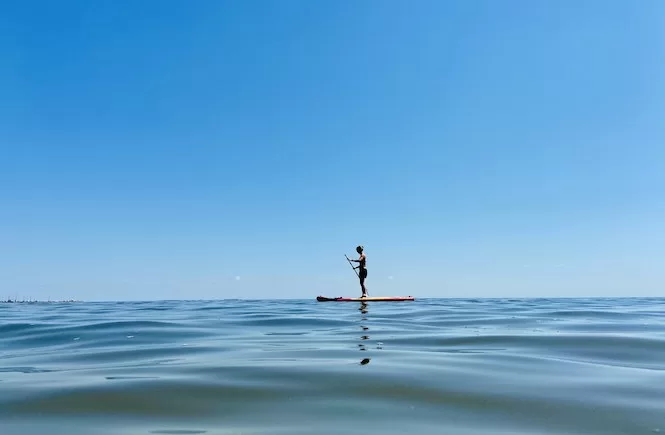
You can scuba dive, rock climb, zip-line, paddle board, and snorkel. My guides are just a click away and hyperlinked for more details. For the latest on rock climbing and zip-lining, check out Facebook events.
Can you suggest the best spots in Malta for historical exploration?
Visit Malta’s ancient cities – Mdina, Valletta, Three Cities and Rabat. Also, visit the pre-historic temples and the Hal Saflieni Hypogeum. Check out my guide to the top historical places to see it all.
What are the best things to do in Malta for families?
Play on safe beaches, visit the aquarium, and visit the Esplora Interactive Science Centre. It’s fun for everyone.
Where can I find live music or entertainment venues in Malta?
Valletta is where concerts happen. Jazz, rock, classical – it’s all there. And for clubbing, Paceville or Gianpula are the spots. Keep an eye on Facebook events for the latest gigs.
What are the best things to do in Malta for nature lovers?
Malta is rich with nature spots, caves, and cliffs. You can discover them all by checking out my guide to Malta’s hidden gems.
What are the best culinary experiences or food tours available in Malta?
I recommend trying a Valletta food-tasting tour.
Want to plan your whole Malta trip without the stress?
My 7-Day Malta Itinerary handles the routes, timings, and where to start, so you can just be there. Less planning. More Malta.