Just a quick heads up – some of the links I share on this site are affiliate links. That means if you click on one and make a purchase, I may earn a small commission at no extra cost to you. Your support through these links helps me create valuable content.
Here’s something most Malta guides omit: if beaches are the main reason you’re visiting, you’d probably enjoy Greece or Croatia more. Malta really shines for its history, culture, varied landscapes, water sports and friendly locals.

Written by Laura Jasenaite, Malta travel expert with 15+ years living on the islands.
This guide is for first-time visitors to Malta staying four to seven days, still figuring out what to do, where to go and what to see. I’ve lived here since 2011, so this is the honest version, including the parts that tourist brochures skip.
Last reviewed: September 2026.
Quick answers
- How many days do you need? 3 to 4 days covers the main sights. 7 days is the number I’d choose if you want to relax as well.
- Best time to go? April, May and June are lovely. October is my favourite, because the sea is still warm and the air is a pleasant 25 to 26°C.
- When to avoid? July and August, unless you really like heat. It’s crowded and very hot, especially for sightseeing.
- Where to stay? St Julian’s or Sliema for convenience, Valletta for history, Gozo for slowing down.
- Do you need a car? Not for Valletta and the harbour area. Yes, if you want the north, west and Gozo on your own schedule.
- What does it cost? Roughly €20 to €25 for a meal without drinks, €15 to €25 for a taxi ride. Accommodation varies a lot by season.
Don’t have time to plan every detail?
I’ve already done it for you. My complete 7-day Malta itinerary has the routes, timings and local tips, so you can enjoy the islands stress-free.
What do first-timers get wrong about Malta?
I see the same four mistakes every year.
- Thinking 2 days is enough. Two days gets you Valletta and not much else. Malta is small on the map, but the sights are spread out and the buses are slow.
- Thinking you can walk everywhere. You can walk Valletta and much of Sliema and St Julian’s. You can’t walk between Mdina, the Blue Grotto, Dingli Cliffs and the Three Cities.
- Coming mainly for the beaches. There are beaches, and some are good, but the culture and history are what make Malta different from every other Mediterranean island.
- Coming in July and August. It’s crowded and the heat is heavy. If your dates are flexible, don’t.
I’ve written more about this in my guide to insider tips and travel mistakes to avoid.
How many days do you need in Malta?
Three to four days is enough to see the main highlights: Valletta, Mdina, the Three Cities and one coastal or boat day. With seven days you can add Gozo properly, spend a slow day on the water, and still have time to sit in a square with a coffee. That’s the pace I recommend if you want a holiday and not a checklist.
| Trip length | What fits | Who it suits |
|---|---|---|
| 2 days | Valletta and one other stop, at a rush | Cruise passengers, stopovers |
| 3–4 days | Valletta, Mdina and Rabat, the Three Cities, one boat or coast day | Culture-focused, short break |
| 5–6 days | Everything above plus a full Gozo day and a swimming or hiking day | Most first-timers |
| 7 days | All of it, with slower days and time for villages and the sea | Anyone who wants to relax as well as sightsee |
If you’d rather not work out the sequencing yourself, this is exactly what my 7-day itinerary does.
When is the best time to visit Malta?
April, May and June are the months I’d pick for a first trip. It’s warm, the island is still green in spring, and it’s not yet at its busiest. October is my personal favourite: the sea is still warm from summer, the days are about 25 to 26 °C, and fewer crowds.
July and August are the months I’d never choose for sightseeing. It’s crowded, very hot and expensive. If you love heat and beach days, you’ll enjoy it. If you plan to walk around Valletta or hike, you won’t.
Winter is quiet and green, and the walking is good. March is one of my favourites for it: wildflowers are out and so green everywhere.
More detail: best time to visit Malta, Malta in October, and my Malta packing list for what to bring in each season.
Where should you stay in Malta?
It depends on what you want from the trip.
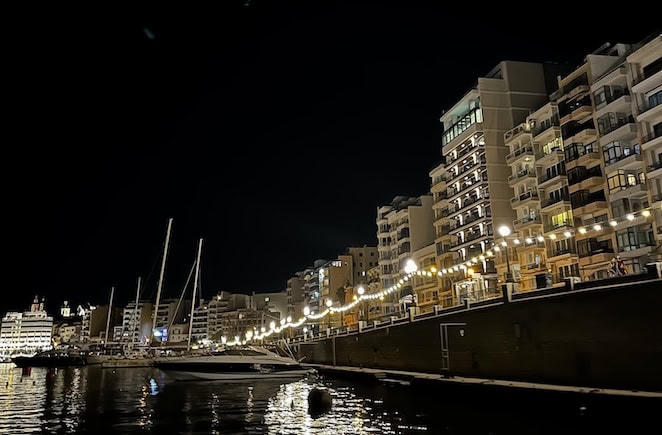
- St Julian’s and Sliema: the most options, on the coast, and easy to get around from. St Julian’s has the big international hotels, sea views and spas. Sliema has a long seafront walk and ferries across to Valletta. Read my St Julian’s guide and Sliema guide.
- Valletta: best if history is why you’re coming. You wake up inside it and can see it before the day trippers arrive.
- Gozo: for a slower trip. I’d seriously consider splitting a week between Malta and Gozo.
- Countryside retreats: quiet, spa-focused, and good if you have a car. The Corinthia Palace in Attard and Kempinski Hotel San Lawrenz in Gozo are two examples, and both are beautiful.
Compare hotels in St Julian’s or hotels in Sliema on Booking.com.
Prices vary a lot by season. As a rough guide, an Airbnb starts from around €100 a night, luxury hotels are much higher, and off-season prices can be about half of summer.
If history is the priority, compare Valletta hotels on Booking.com.
For a full breakdown, see where to stay in Malta and Gozo and best area to stay in Malta. Looking for something special? My guide to 5-star hotels in Malta and Gozo covers the luxury end.
How do you get around Malta?
You can’t walk everywhere, and the buses are slow and infrequent from some locations. That doesn’t matter if you’re staying in Valletta, Sliema, or St Julian’s, where many attractions are within reach, but it matters a lot if you want to explore the south and west, where the best scenery lies.
- Taxis: usually €15 to €25 depending on the route. They cost around double in summer. Not crazy expensive compared with some other European holiday destinations.
- Buses and ferries: cheap. The Valletta–Sliema ferry is the most pleasant short commute on the island.
- Hire car: if you’re staying north of Valletta, or you want to see Gozo properly, a car makes a real difference. Compare prices on DiscoverCars.
- Ferry to Gozo: from Ćirkewwa in the north of Malta to Mgarr in Gozo takes about 25 minutes and runs frequently.
Full details in my guide to getting around Malta.
Getting the logistics right is half the trip.
My 7-day itinerary sequences everything so you’re not backtracking across the island, with timings and where to eat.
What are the best things to do in Malta?
Explore 7,000 years of history
Most islands just have a plaque with a timeline. In Malta, you actually walk through it. The prehistoric temples date to about 3600 BC, so they’re older than Stonehenge and the pyramids. After that came the Arabs, then the Romans, two centuries of the Knights of St John, the British, and finally the Second World War. Nearly all of those structures are still standing.
Valletta It is compact enough to explore in a morning, yet worth a full day. After the Great Siege of 1565, the Knights built a new capital from scratch on a bare limestone peninsula; many people still live in those original buildings.
Upper Barrakka Gardens offers a view of the Grand Harbour. St John’s Co‑Cathedral hides one of the most dramatic Baroque interiors in the Mediterranean. I also recommend visiting the Lascaris War Rooms, the former Allied headquarters in WWII, book a tour; it’s truly amazing.
If you’re interested in history, a walking tour of Valletta is the best first thing to book. A well-reviewed option is this 2.5-hour guided walking tour of Valletta. My own guides are here too: what to do in Valletta and Valletta walking tours.
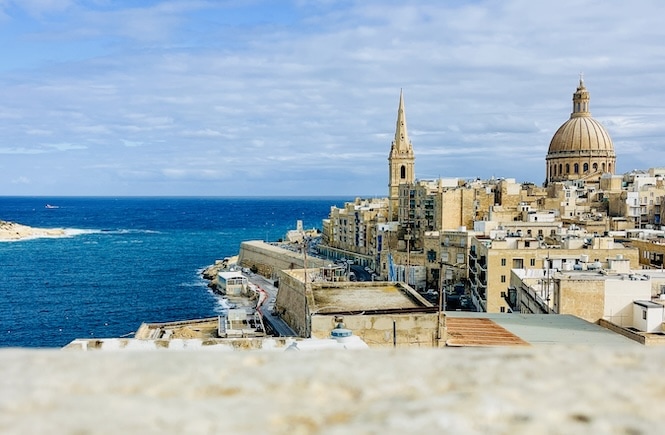
Mdina and Rabat. Mdina is the old walled capital, with narrow streets and almost nobody living there. Come early, ideally by 10 am, before crowds arrive. Rabat next door has the catacombs and St Paul’s history. See Mdina and Rabat.
The Three Cities. Vittoriosa, Senglea and Cospicua sit across the harbour and are where the Knights actually lived before Valletta existed. Far fewer visitors, a stronger sense of everyday life, and the view of Valletta from the Senglea bastions is better than the view from Valletta itself. Full guide: Three Cities.
Prehistoric sites. The Ħaġar Qim and other megalithic temples and the Hal Saflieni Hypogeum are the reason UNESCO cares about this island. Book the Hypogeum well ahead.
Malta in WWII. Malta was among the most heavily bombed places in the war and was awarded the George Cross collectively in 1942. The National War Museum in Valletta covers it well. In Mosta, a bomb fell through the Rotunda’s dome during Mass in 1942 and did not explode. It’s on display inside the church.
Go to the villages tourists skip
If you have time, go to Żabbar, Żebbuġ and Tarxien. These are old villages with beautiful parish churches, narrow streets and almost no tourists, so you see everyday Maltese life. Every village has a band club you can visit, and you’ll see locals sitting there eating cheesecakes (the local ricotta pastries) and drinking Kinnie. If you want to see real Malta and have more time, I really recommend it.
Beaches
Malta’s beaches aren’t its strongest asset. The sandy beaches, Għadira in the north and Golden Bay in the west, are decent, wide, and accessible, with sunbeds and nearby food. In summer they are anything but quiet.
What I actually love is different: almost every rocky coastline on the island has ladders that are installed in June and removed in October. My favourite spot is the rocky coast in Sliema, on the open-water side near Exiles. In summer it’s quiet enough to have a stretch of rock to yourself, the visibility is extraordinary, and if you’re patient you might see an octopus. I’ve also seen a turtle there once.
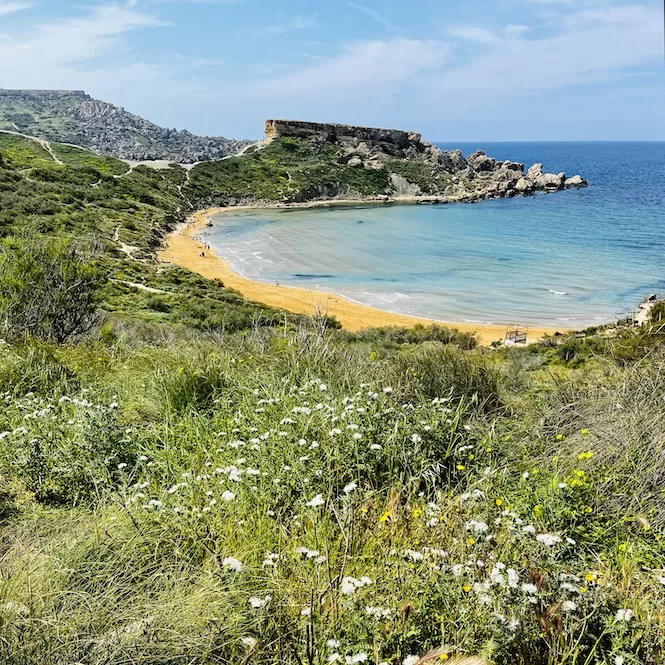
If you want a proper beach, go to Għajn Tuffieħa. It’s still crowded, but less so than the larger sandy beaches, and offers good snorkelling along the rocky sides and bright yellow sand. Note that there are many steps down and back up. If you use a pushchair or have mobility issues, Għadira is the practical choice.
Avoid swimming in the Grand Harbour and port areas. Everywhere else, if the sea is calm, the water is yours. For the full overview, see my Malta beaches map.
| Beach | Where | Best for |
|---|---|---|
| Ramla Bay | East Gozo | Red sand, shallow water, families |
| St Peter’s Pool | South Malta | Natural rock pool, cliff jumping |
| Hondoq Bay | South Gozo | Clear water, views of Comino |
| Blue Lagoon, Comino | Comino | Turquoise water, snorkelling |
| Golden Bay | West Malta | Big sandy beach, family-friendly |
| Għadira Bay | North-east Malta | Largest sandy beach, shallow, accessible |
| Għajn Tuffieħa | West Malta | Views, sunsets, less crowded |
| Imġiebaħ Bay | North-east Malta | Wild, dog-friendly, no amenities |
| Għar Lapsi | South-west Malta | Natural pool, good for kids |
Blue Lagoon and Comino
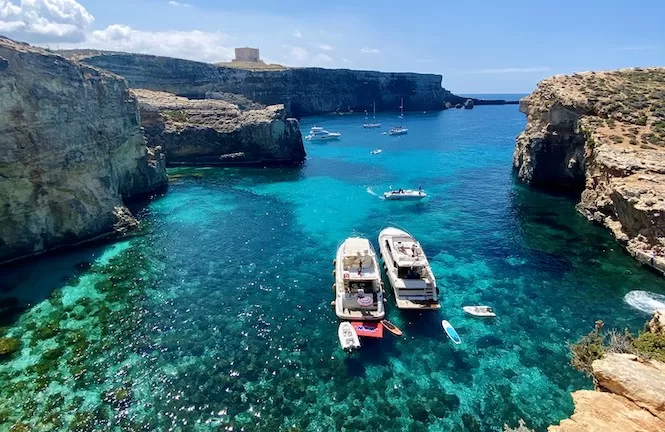
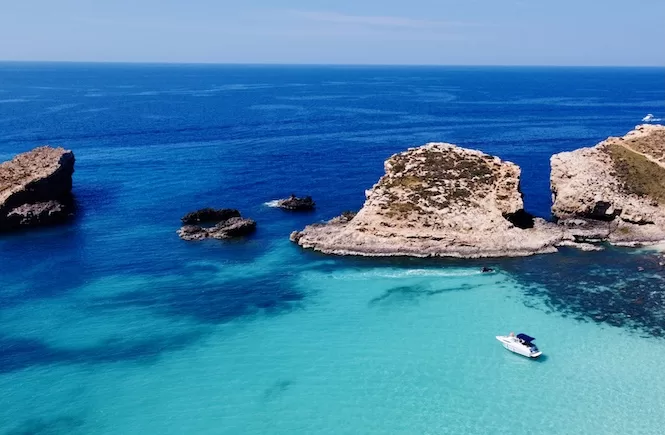
The Blue Lagoon is crowded, but it’s worth it. The easiest way is by boat from Sliema, Bugibba or Mellieħa, and a shared boat trip usually adds the Crystal Lagoon and sea caves. A popular option is this shared boat trip to the Blue Lagoon, Crystal Lagoon and sea caves. If you’re a bigger group, a private boat is often the better option: you share the cost and choose your own swim stops. See my guides to boat trips in Malta and the Blue Lagoon and Comino.
Water sports: diving, snorkelling and kayaking
Malta is one of the best places in the Mediterranean for diving. The water is clear enough to see 30 to 50 metres. There are reefs and wrecks for every level, and you can dive all year. If you’ve never tried it, a beginner session is an easy way in. A beginner-friendly option is this discover scuba diving experience from St Julian’s. The Blue Hole near Dwejra in Gozo is one of the best dive sites in the Mediterranean. My scuba diving guide has the details.
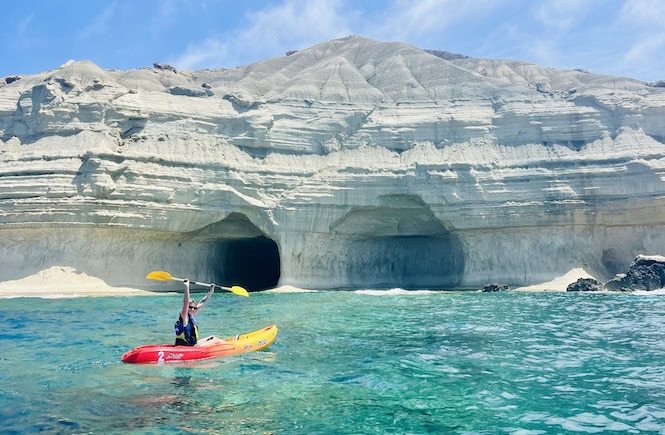
If you’d rather stay on the surface, kayaking is a great simple activity. Paddle to sea caves and cliffs you can’t reach on foot. This guided kayaking tour around Comino and the Blue Lagoon is a good place to start. More on snorkelling, paddle boarding and kayaking to Ta’ Marija Cave.
Natural wonders and coastal walks
Malta isn’t a well‑known hiking destination; the island is small and its highest point is just under 300 metres, but the coastline is dramatic, offering varied landscapes across the islands.
In winter, hiking is excellent; the island feels like spring, with green scenery and abundant wildflowers.
Browse my trekking guides – there are many options, from shorter, few-kilometre hikes to full-day options. Avoid hiking in summer. Between June and mid-September, the heat from 11 am to 4 pm is genuinely difficult.
Other natural coastal wonders that involve a little walk are the Dingli Cliffs. They’ll reset your sense of scale. The cliffs plunge steeply into the sea, and the tiny, unreachable Filfla island is visible on the horizon. See the Dingli Cliffs guide.
The Blue Grotto on the south coast is worth the boat trip for the cave reflections, especially in the morning; see my Blue Grotto guide. St Peter’s Pool near Marsaxlokk is a natural rock pool popular for cliff jumping.
Visit Gozo
Gozo is less developed than Malta, and that is exactly why it’s worth the trip. Less development means more nature, quieter roads and fewer crowds. It’s slower, in the way that reminds you what a holiday is supposed to feel like.
What I love most are the farmhouses. Old stone farmhouses across the island have been converted into holiday rentals with private pools, thick limestone walls and shaded courtyards. Two or three nights in one is a completely different experience from a St Julian’s hotel, and often comparable in price. See villas in Gozo with a private pool. You can also browse places to stay in Gozo on Booking.com.
What to see: the Ġgantija temples outside Xagħra are older than the mainland temples and rarely crowded. The Citadella in Victoria is free to walk around and gives you the view across the whole island. See Victoria and the complete guide to Gozo.
If you like something more adventurous, Gozo is great for going off-road. A jeep or buggy tour takes you to hidden spots you’d miss on your own. A well-reviewed option is this full-day Gozo jeep tour with lunch and a boat ride.
Dwejra Bay. The Azure Window collapsed in March 2017 and is gone. What remains is still one of the most remarkable places in these islands. The Inland Sea is a lagoon connected to the open water by a tunnel in the rock, lined with colourful boathouses. On the other side of the headland, the Blue Hole is one of the best snorkelling spots I know. At sunset, the whole bay changes colour. Go to Dwejra: the window is gone, but the place isn’t. Guides: Dwejra Bay, Inland Sea.
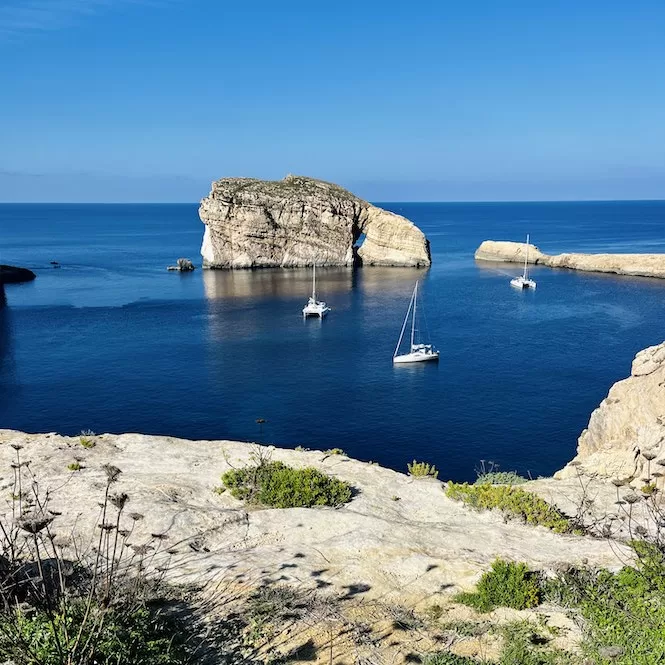
Day trip or stay? Gozo works as a day trip, but if you want to see Dwejra at sunrise or spend an evening in a village square, staying overnight changes the experience completely.
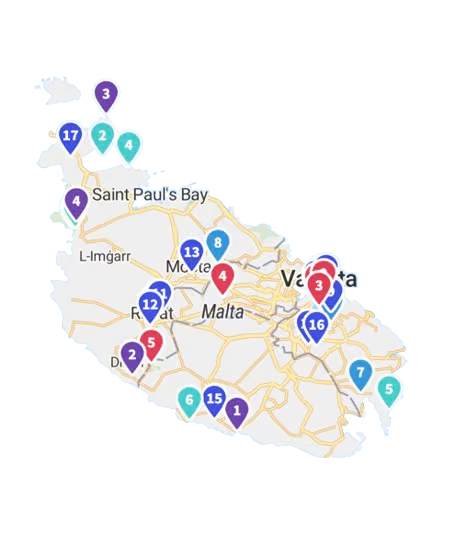
Get a FREE Attractions Map
Planning a trip to Malta, Gozo, or Comino? Get this free interactive map filled with insider tips, Google Maps links, and more.
I want it!Village festas
Village festas are where Maltese summer actually lives. Every parish has one in June, July or August on the patron saint’s day. Expect brass bands, streets decorated in parish colours, a candlelit procession and, on the last night, fireworks. It’s a competition between rival firework factories, and people take it seriously. Some festas are enormous, like St George’s in Victoria, Gozo. Others are small enough that you’re the only tourist at a table of locals. The small ones are usually better.
Nightlife: who it’s for
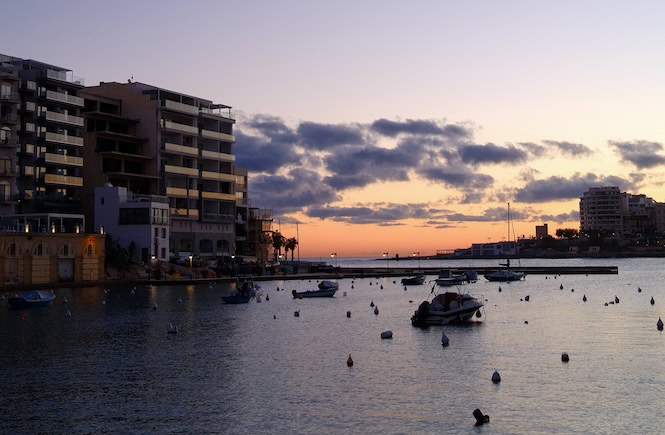
Paceville in St Julian’s is the main nightlife hub, and I’ll be direct: it’s loud, crowded at weekends and built for people who want to be out until 4 am. If that’s you, it delivers. To me it’s just crowded and noisy. If it’s not your scene, don’t feel obliged. A drink at a Valletta rooftop bar with the Grand Harbour below, or an evening walk in one of the old towns, is how most people actually enjoy a Maltese evening. In summer, the temperature drops after sunset, the squares fill up, and families come out.
How much does a trip to Malta cost?
Malta isn’t that expensive compared with some other popular European holiday destinations, but prices vary with the season.
| Item | Rough cost |
|---|---|
| Meal (no drinks) | €20–25 |
| Taxi ride | €15–25 (about double in summer) |
| Buses and ferries | Cheap |
| Accommodation | From about €100 a night on Airbnb; luxury hotels much higher; off-season can be half of summer prices |
Who is Malta actually for?
- History lovers: yes, absolutely. There’s enough to spend two weeks and not run out. Come between October and May. Come in March if you can.
- Hikers and nature people: yes, but avoid summer.
- Divers and snorkellers: one of the best places in the Mediterranean, in any season.
- Nightlife seekers: July and August.
- People who want mainly beaches: the beaches are good but not exceptional.
Frequently asked questions
Want to plan your whole Malta trip without the stress?
My 7-Day Malta Itinerary handles the routes, timings, and where to start, so you can just be there. Less planning. More Malta.