Just a quick heads up – some of the links I share on this site are affiliate links. That means if you click on one and make a purchase, I may earn a small commission at no extra cost to you. Your support through these links helps me create valuable content.
If there’s one mistake I see people make, it’s booking Malta in August and expecting it to be relaxing.

Written by Laura Jasenaite, Malta travel expert with 15+ years living on the islands.
I’ve lived here since 2011, and I watch it every summer: tourists trying to walk around Valletta at midday, burned and exhausted, having underestimated the heat and the crowds. August means 33°C by 7am, beaches packed so tight there’s no room for a towel, and streets full of people.
Malta doesn’t have to be like that. It can be quiet, surprisingly wild and genuinely good value. You just need to know a few things before you arrive.
Here are the seven most common mistakes I see visitors make, and what to do instead.
Mistake 1: Not Giving Malta Enough Time
A weekend in Malta gives you Valletta and Mdina. That’s roughly it. People assume that’s enough because the island looks small on a map.
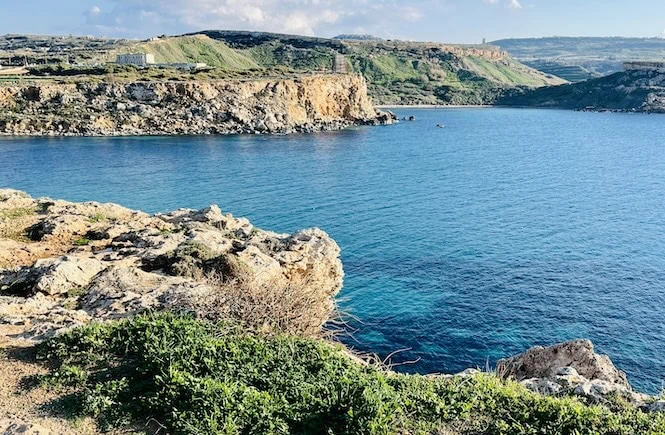
What they miss is Gozo, the sister island that feels completely different: quieter, more agricultural, with a slower pace to it. They also miss the coastal cliffs, particularly in the south and west, where the rock drops sharply into the sea and the scale of it catches you off guard. Most people who finally reach those cliffs say something along the lines of “I had no idea Malta looked like this.” A weekend can’t give you that.
Don’t have time to plan every detail?
I’ve already done it for you. Get my complete 7-day Malta itinerary with routes, timings, and local tips included, so you can enjoy the islands stress-free.
Get the guide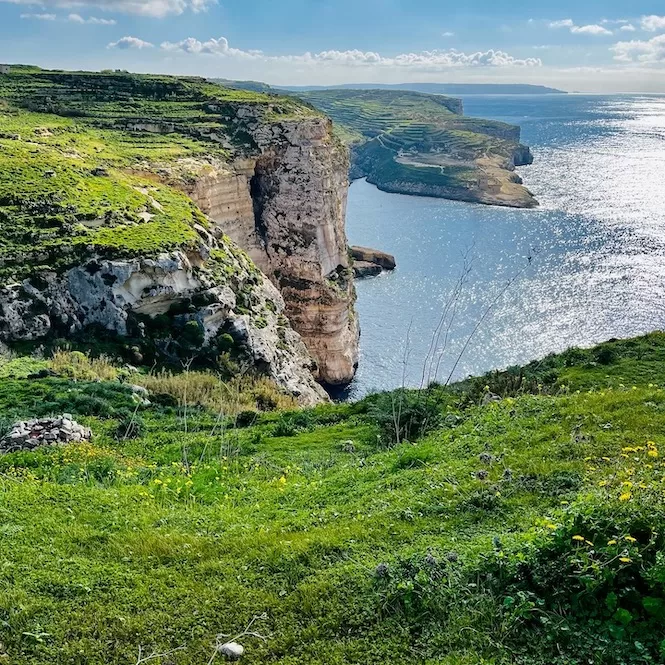
If you’re coming for the first time, four days is the minimum. A week is better, particularly if you want to take the ferry across and spend a night or two exploring Gozo. There’s also much more to Malta itself than the standard itinerary covers, from coastal hiking trails to villages that barely appear on tourist maps.
Mistake 2: Packing for the Wrong Season
The packing mistakes are split neatly by season.
If you’re coming in summer, sunscreen is non-negotiable. The UV in Malta burns faster than most northern Europeans expect. You see it every year, people bright red by day two, having gone out without applying first or underestimated the intensity. Don’t leave your accommodation between 11am and 5pm without sunscreen. Wear a hat and lightweight, breathable clothes.
If you’re coming in winter, pack a jacket. Not a heavy coat, but something you’d comfortably wear in 10°C wind. Malta has a reputation as a warm destination, but the island is surrounded by sea and the wind makes it feel much colder than the temperature suggests. Most buildings don’t have central heating, so evenings can be chilly too. Check whether your accommodation has heating before you book.
For either season, comfortable walking shoes make a real difference. Malta’s historic towns are built on hills with uneven stone pavements, and you cover more ground on foot than most people expect. My complete packing guide covers everything by season. If you’re visiting in winter and worried about rainy days, there’s also a solid list of rainy-day options worth bookmarking.
Get a FREE Attractions Map
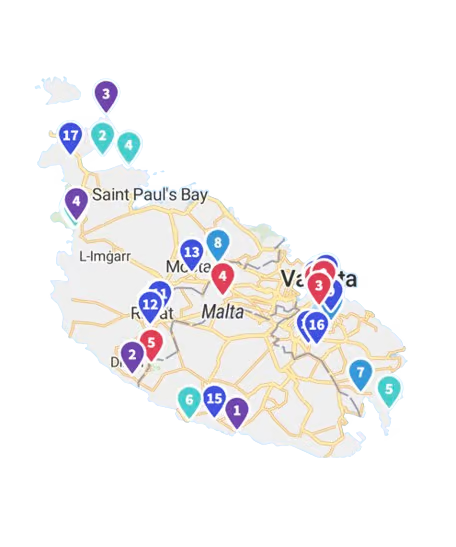
Planning a trip to Malta, Gozo, or Comino? Get this free interactive map filled with insider tips, Google Maps links, and more.
I want it!Mistake 3: Not Planning Your Transport
Malta is small but it isn’t walkable. Valletta and the Three Cities work well on foot, but most beaches, historical sites and viewpoints are spread across the island, on roads that are often hilly and without pavements.
Public transport covers the island well. A single bus journey costs €2.00 in winter (19 October to 13 June) and €2.50 in summer. Tallinja Direct (TD) express routes cost €3.00. Buses are air-conditioned and reliable, though they can be slow in traffic. If you plan to use public transport, accommodation in Valletta, Sliema, St. Julian’s, Bugibba or Mellieha gives you the best connections.
If you’re staying for a week or more, renting a car is worth considering. Malta drives on the left, which most people adjust to quickly. Take it slowly on the first day until you’re comfortable. Street parking is free in most areas, but finding a spot in the centre takes patience. I use Discover Cars for the best selection and price comparison. For tips specific to Maltese roads, my guide to driving in Malta is worth a read first. A full breakdown of all transport options is in the getting around Malta guide, and for everything about hiring a car, the Malta car rental guide covers it all.
Need advice on renting a car in Malta? Here’s my guide with insider tips on everything you need to know.
Mistake 4: Visiting in July or August
July and August are the most expensive months to visit Malta and, in my view, the least enjoyable. Beaches are packed, the queues for the Gozo ferry are long, accommodation prices are at their peak, and the heat between 11am and 5pm makes outdoor sightseeing genuinely uncomfortable.
October is my favourite month. The temperature sits at around 23 to 25°C, the sea is still warm at 25°C or above from a full summer of heating up, and the crowds are largely gone. You can spend a full day outdoors without needing to retreat into shade, and you get both sightseeing and beach time in the same day. In August you’re essentially waiting until 5pm before it’s comfortable to be outside. October, you can be out all day.
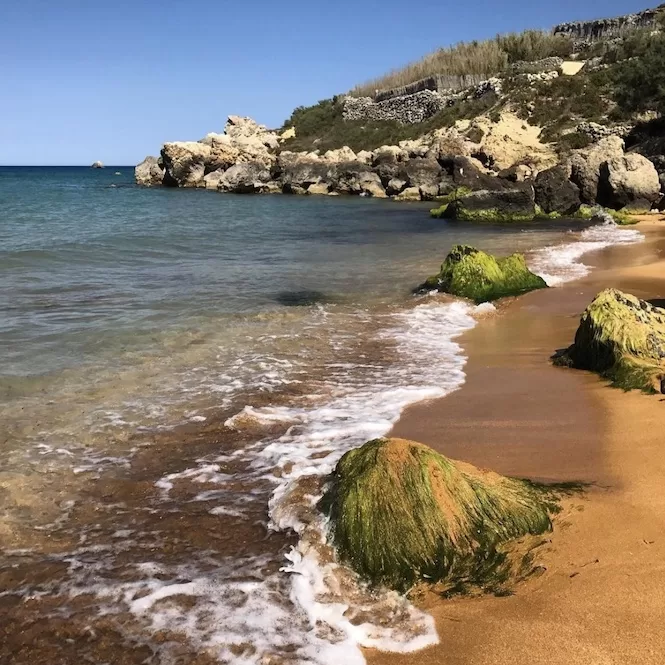
May is also good, with similar weather to October, though it can get hotter towards the end of the month, but the sea is still cold from winter. September is a reasonable compromise: quieter than peak season with the heat starting to ease.
For a detailed look at what each month is actually like, my guide to the best time to visit Malta covers the full year. If you’re set on summer, the summer guide has specific tips for making it work. And if October is looking like a good option, here’s what to expect in October.
Mistake 5: Sticking Only to the Tourist Trail
Most visitors arrive with the same list: Valletta, Mdina, Blue Lagoon. Those are all worth doing. But if that’s all you see, you leave without understanding what Malta actually looks like.
One of my favourite places to point people towards is the Coral Lagoon near Mellieha, a hole in the cliff face that opens directly onto the sea. It’s particularly good at sunset. People go there to jump in, which I wouldn’t recommend as it’s more dangerous than it looks. What I’d suggest is going by kayak if the sea is calm: you paddle through the opening and come out the other side. Very few tourists do it that way.
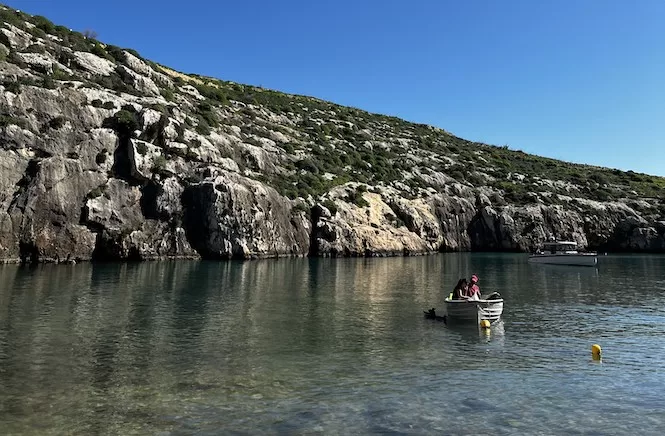
In Gozo, Wied il-Għasri is a narrow canyon that opens onto a small pebble beach with very clear water. I was genuinely impressed the first time I visited. You can swim and snorkel there, or just walk down to look from above. It barely appears on most tourist itineraries, despite being one of the most visually striking spots in the Maltese islands.
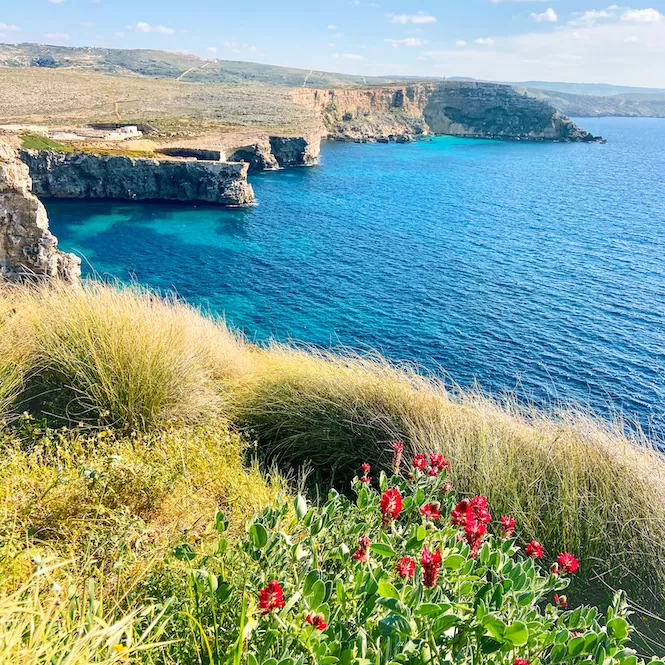
In winter, the coastal areas around Salina and Paradise Bay are particularly good for walking. Malta in winter is more like spring in northern Europe: green, full of wildflowers, and the paths have almost nobody on them. My Majjistral Park guide is a good starting point if you want to explore away from the main roads. For more ideas on places most visitors miss, my guide to off-the-beaten-track Malta has more to work with.
Mistake 6: Underestimating the Sea
Malta has beautiful swimming, but the sea here is not always gentle.
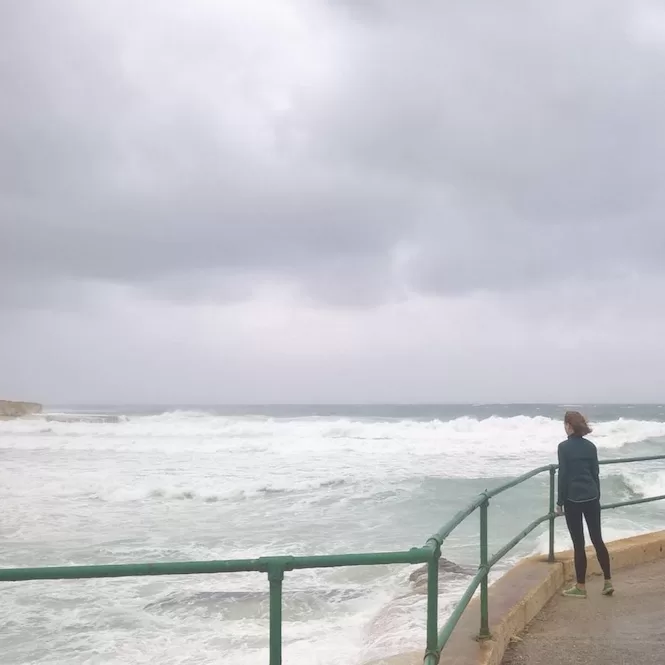
The most important rule: if the sea looks rough, don’t go in. I had a sharp reminder of this at my usual spot in Sliema. The sea looked manageable, a friend convinced me it was fine in the sheltered bay, and before I’d even reached the ladder, a wave came and knocked me off the rocks. It happens fast. Waves on rocky coastlines can push you against the rock or pull you into deep water in seconds.
If it’s rough, keep your distance. Malta has fatal incidents every year involving waves at rocky spots, including people who were simply trying to take a photograph closer to the edge.
Jellyfish are the other thing to know about. They’re not life-threatening in Malta, but some species cause a painful burn and can leave a skin reaction. I swim with a snorkel mask so I can see them before I’m in the middle of them. Concentrations vary by year and by the direction the wind is blowing. In 2025, there were almost none; 2026 is still too early to say. The website maltaweather.com gives a useful guide to beach conditions based on swell and wind, though note it estimates jellyfish risk from those same factors rather than direct sightings, so use it as a guide rather than a guarantee.
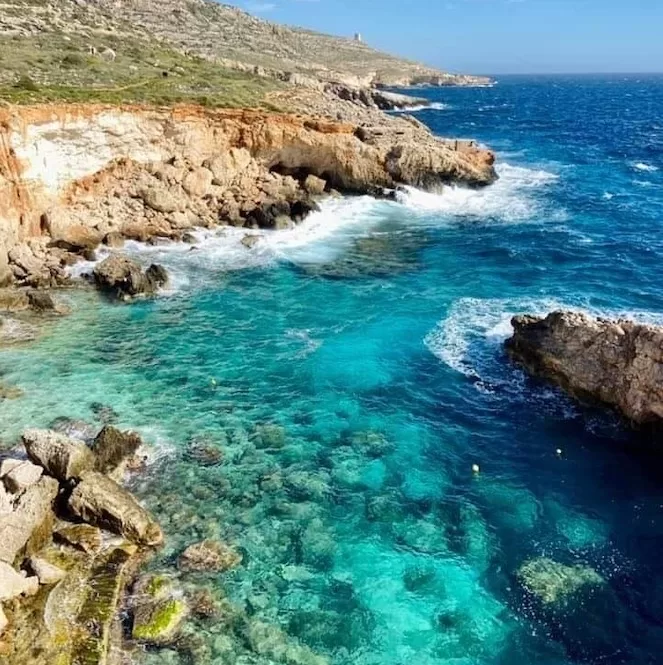
Avoid swimming in or near harbours and areas with boat traffic. Stick to designated swimming zones where possible, and around rocky areas, be careful: the limestone is sharp, and the sea floor is often closer than it looks. For more on what to watch for in Maltese waters, my jellyfish in Malta guide covers the main species and how to avoid them.
Mistake 7: Worrying Too Much About Travelling Solo
Malta is one of the easier places for solo travel, and one of the safest.
I’ve lived here since 2011 and I’ve always felt safe walking around on my own, including at night in Sliema and Valletta. English is an official language, which helps enormously for navigating, asking directions and connecting with people. Locals are genuinely friendly, and there’s a large expat community on the island, which makes it easy to find company if you want it.
The one area where I’d use standard city caution is Paceville, Malta’s main nightlife district. It’s busy and rowdy on weekend evenings, with a visible police presence, but use common sense and watch your drink.
My full solo travel in Malta guide has more detail, including the best areas to stay and tips for getting around independently. For a broader look at safety across the islands, I’ve also written a guide to staying safe in Malta.
Malta Travel Tips: Frequently Asked Questions
I hope this helps you plan a trip that actually goes the way you hoped.
A few more resources that might be useful: my full list of things not to do in Malta, a guide to the best things to do across the island, and my guide to the best areas to stay if you’re still deciding on a base. For itineraries, I have guides for 2 days and 4 days, plus the full stress-free 7-day Malta itinerary if you want everything planned out. And if you still have questions, my Malta travel info page covers the most common ones all in one place.
Feeling overwhelmed by the logistics? You aren’t alone. Most visitors spend 20+ hours researching just to figure out the bus routes. I’ve done the hard work for you.
My 7-Day Malta Itinerary covers the must-see sites, daily transport tips, and eliminates the guesswork. It’s designed to save you time so you can just enjoy your holiday.