Just a quick heads up – some of the links I share on this site are affiliate links. That means if you click on one and make a purchase, I may earn a small commission at no extra cost to you. Your support through these links helps me create valuable content.
Getting around Malta is easier than most visitors expect, but the right answer depends on two things: where you are staying and how long you are there for. If you are based in a central area like Sliema, St Julian’s, Valletta or Gzira, you do not need a car. Buses and taxis will cover everything. If you are staying somewhere more remote, or you want to explore Gozo properly, a rental car makes a real difference.
I have lived in Malta since 2011 and used every transport option on the island. This is what I would tell a friend before their trip.

Written by Laura Jasenaite, Malta travel expert with 15+ years living on the islands.
Two questions that decide your transport in Malta
The answer comes down to two things: where you are staying in Malta, and how long you are there for.
If you are based in a central area such as Sliema, St Julian’s, Valletta or Gzira, parking is difficult and buses and taxis cover the main sights well. In this case, I would not bother with a car.
If you are staying for a week or longer, or you want to reach places that are not well served by buses, renting a car gives you a level of freedom that public transport simply cannot match. Some of the best spots on the island are genuinely hard to reach without your own wheels.
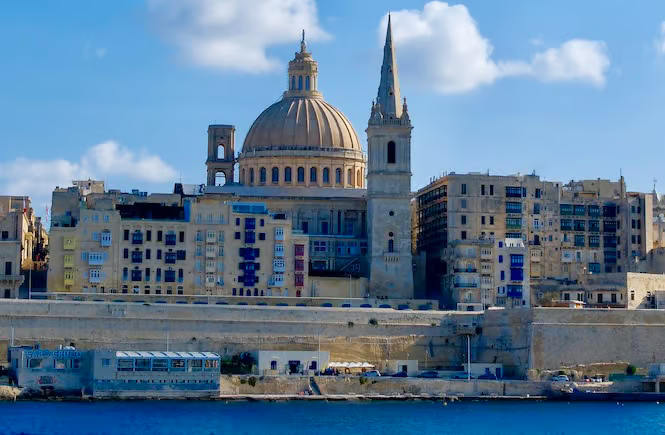
For a short stay in a central area, the combination that works best is buses for daytime sightseeing and Bolt or eCabs for evenings or when you have luggage. And whatever your plan, do not skip the ferry between Valletta and the Three Cities. It is affordable, fast, and the views across Grand Harbour from the water are something you will not get any other way.
Getting around Malta by bus
Malta’s buses are affordable and cover most of the island, but they run in the same traffic as cars, so they are almost never on time. That said, if you are not in a rush, they are perfectly fine for getting around.
A single journey costs €2.00 from October to June and €2.50 in summer. Night routes cost a little more. One thing most travel guides do not mention: residents in Malta travel on buses for free, which is why services get very crowded during peak hours. If a bus is full when it reaches your stop, it will not pull in. You wait for the next one.
For central routes, this is rarely a problem. The services between Sliema and Valletta, and between St Julian’s and Valletta, are both frequent and you will not wait long. It becomes more of an issue during rush hour and in the height of summer.
The honest truth is that as a tourist you usually have more time than a local commuter. Buses are fine. Just avoid the peak-hour crush and you will have no trouble.
The Tallinja card and app
Use the Tallinja app or the publictransport.com.mt website to plan routes and check real-time arrivals. Both are reliable and will show you exactly which bus to take and when it is due.
If you plan to use buses frequently, the Tallinja Explore card is worth it. It costs €25 for adults and €7 for children and gives unlimited travel for seven consecutive days. You can buy a Tallinja card at Malta International Airport on arrival. You can also pay by contactless card or cash directly on the bus.
Taxis and ride-hailing in Malta
Taxis in Malta are plentiful and come quickly. I mostly use Bolt, and sometimes check Uber too, because the price for the same journey can vary quite a bit between apps. eCabs is also operating and is worth including in your comparison.
One practical tip worth knowing: prices can surge after large events and from the airport. If you land and the fare looks much higher than expected, just wait half an hour and check again. It usually comes down.
White taxis are still around and you can hail them on the street, but they tend to cost more than the apps. For most journeys, Bolt or eCabs will be the cheaper option.
Renting a car in Malta
A rental car makes the most sense if you are staying for a week or longer, or if you want to explore places that buses do not reach easily. Check out Discover Cars for a good range of vehicles. I also have a full guide to renting a car in Malta with everything you need to know before you book.
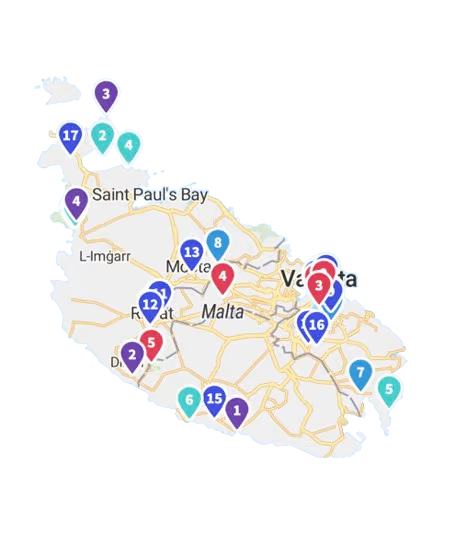
Get a FREE Attractions Map
Planning a trip to Malta, Gozo, or Comino? Get this free interactive map filled with insider tips, Google Maps links, and more.
Driving in Malta is more chaotic than most visitors expect. It is similar to driving in other southern European countries: people honk, not everyone uses their indicator, some drivers gesture with their hand instead, and overtaking can happen from positions you would not anticipate. The key is to go slowly, stay alert, and not take any of it personally.
Keep left. Malta drives on the left side of the road, as in the UK.
Speed cameras are widespread. Stick to the speed limit throughout.
Keep your phone away. Fines for using a mobile while driving are significant in Malta.
Navigation: Google Maps and Waze both work, but they can route you through streets that feel uncomfortably narrow. If you end up somewhere tight, keep going until you find a safe spot to stop. Malta is small enough that you will always reach a wider road.
Parking: White bays are open to everyone. Yellow means no parking. In Valletta, green zones are for residents all day, and blue zones are for residents between 7pm and 7am. Check signs in each area as some have time limits.
Valletta access: Driving into central Valletta is subject to a Controlled Vehicular Access charge. The current rate is €0.82 per hour, with the first 30 minutes free. You can drive around Valletta’s perimeter without charge. Here’s the full price list.
Fuel: Petrol stations are plentiful across Malta and Gozo. During the day, pump attendants will refuel your car for you. At night, automated pumps take over and most accept card payments.
Car park attendants help manage spaces in some public car parks. A small tip of around €1 is customary.
Need advice on renting a car in Malta? Here’s my guide with insider tips on everything you need to know.
Getting around Malta by ferry
Malta has several ferry routes that are genuinely useful, and most visitors overlook at least one of them.
Sliema to Valletta
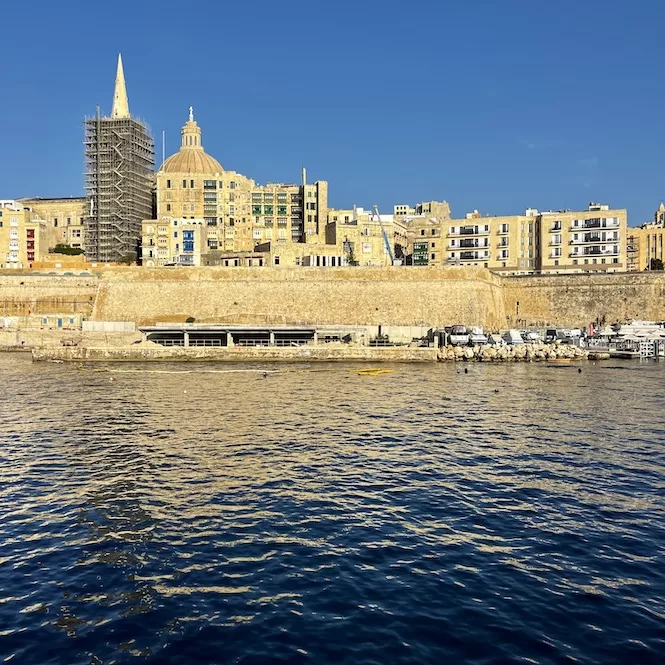
The ferry between Sliema and Valletta runs every 15 to 20 minutes and is one of the most convenient ways to reach the capital. As you cross, you get clear views of Valletta’s fortified walls and Manoel Island that you simply cannot see from a bus. Get on the ferry from Sliema to Valletta here.
Valletta to the Three Cities
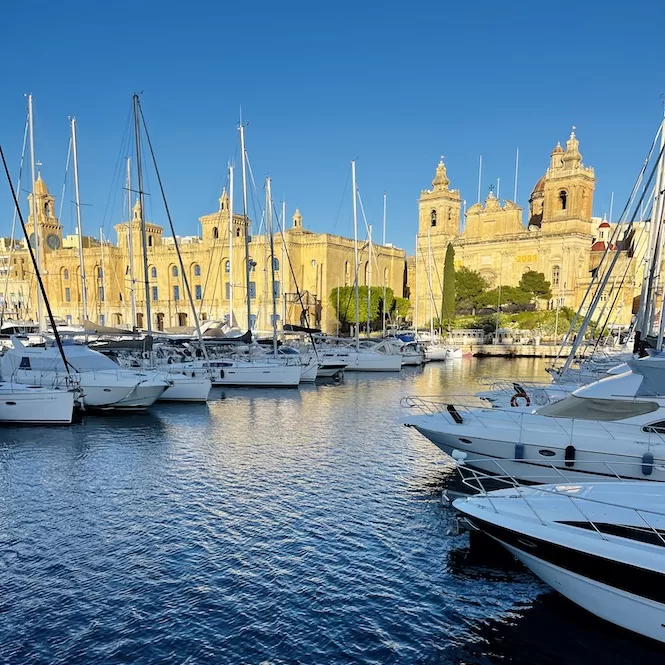
This is the crossing I would not miss. The boat goes from Valletta to Cospicua across Grand Harbour, and the views along the way are remarkable. It is fast, affordable, and a completely different experience from arriving in the Three Cities by road. Here is where the boat leaves from Valletta, and here is where it arrives in Cospicua.
Ferry to Gozo
If you are travelling to Gozo on foot, take the passenger ferry from Valletta. If you have a car, use the ferry from Cirkewwa in the north of Malta. The crossing takes around 30 minutes and runs approximately every 45 minutes. The round-trip fare for a foot passenger is €4.65. Find out more in my complete guide to Gozo.
Shuttle to Comino and the Blue Lagoon
Shuttle boats for Comino leave from Marfa or Cirkewwa. If you are already in Gozo, the shuttle also runs from Mgarr Harbour. My full guide to the Blue Lagoon and Comino covers everything you need to know.
Hop-on hop-off buses
The hop-on hop-off bus is a good choice if you want to see the main sights without navigating the regular bus system or renting a car. The stops cover the most popular locations, so you just wait at any stop for the next bus to come round. No need to check schedules or work out which route goes where.
It is also more affordable than renting a car if all you want to do is cover the highlights. The current service runs over 20 stops across North and South routes. You can sit on the upper open deck, which is great for photographs. I would not recommend sitting up there in the middle of a summer’s day though. The sun in Malta at midday is not something to underestimate.
Walking in Malta
Walking is a good way to explore individual towns at your own pace. Valletta, Mdina and the Sliema waterfront are all well suited to it, and you will notice things on foot that you would miss from a bus or taxi. That said, Malta is hilly and pavements are narrow, so walking between separate areas is not practical for most people. Be ready for some steep climbs, especially in Valletta and Mdina.
My honest take after 15 years of getting around Malta
Most people overthink this. Malta is a small island and none of the transport options are so bad that they will ruin a trip.
The combination that works for most visitors: buses or walking during the day if you are based centrally, Bolt or eCabs in the evening or when you have bags, and a rental car only if you are staying long enough to genuinely need one. And if you want to know which areas are easiest to get around without a car, my guide to the best areas to stay in Malta covers this in detail.
The thing that catches most people out with the bus system is that if a bus is full, it simply does not stop for you. It is worth knowing before it happens rather than standing at a stop, wondering what went wrong.
The most underrated transport moment in Malta is the Valletta to Three Cities ferry. Most tourists arrive by road and never see Grand Harbour from the water. That is worth changing. And if getting around Malta independently feels like too much to plan, have a look at my guide to travel mistakes to avoid before you go.
If you want all of this planned out for you, including how to structure your days and what to visit in which order, I put together a stress-free 7-day Malta itinerary that takes the guesswork out of it. It also includes full information about how to get to different locations, which buses to use, where to park, and so on.
Want to plan your whole Malta trip without the stress?
My 7-Day Malta Itinerary handles the routes, timings, and where to start, so you can just be there. Less planning. More Malta.
Getting Around Malta: FAQ
Are buses free in Malta for tourists?
No, buses in Malta are not free for tourists. But, bus fares are cheap. You can save by buying a bus pass if you plan to use public transport a lot during your stay. There is an Explore card for unlimited travel for 7 days, a 12-ticket card, or you can pay as you go and buy single journeys. Click here for more information.
What’s the best way to get around Malta?
The best way to get around Malta depends on your preferences and itinerary. If you’re staying for a short time and plan to visit the main attractions, public buses and taxis can be convenient. But, if you’re staying longer and want to explore more remote spots, renting a car might be the best option as it offers more flexibility.
What is the cheapest mode of transportation in Malta?
The cheapest mode of transportation in Malta is the public bus system. The fares start from €2.50 per trip, making it an affordable option for getting around the island. Also, you can buy a tourist card or a package of 12 journeys that gives discounted fares.
Can tourists get a Tallinja card?
Tourists can buy a prepaid bus pass that allows them to travel on all public buses in Malta. You can choose from a variety of options, including a 12 Single Day Journeys card or an Explore card that offers unlimited travel for 7 days. Click here for more information.
Are taxis expensive in Malta?
Taxis in Malta are not as expensive as in other countries, but they are more expensive compared to public buses. Yet, they offer a comfy way to get around. This is especially true if you’re travelling with luggage or want to reach your destination fast. Taxi apps like Bolt, Uber, and eCabs are generally cheaper than white taxis you can hail on the street.
Can I buy a Tallinja card at the airport?
Yes, you can purchase a Tallinja card at the Malta International Airport. Look for the Tallinja booth at arrivals, where you can buy your card and get information about public transportation in Malta.
Do Malta buses accept cash?
Yes, Malta buses accept cash payments. You can pay the driver when you board the bus. But, keep in mind that drivers may not always have change for larger bills, so it’s best to have small denominations or exact change ready.
Can I pay by card on the Malta bus?
Yes, you can pay by card on Malta buses. You can use cash, a pre-paid Tallinja card or contactless payment methods with credit or debit cards. Just tap your card on the payment reader when boarding the bus.
As you can see, there are a variety of ways to explore the island, from cruising the roads in your own rental to hopping around on public transportation. I am sure you will find something that works for you.
Want more? I’ve got a guide on the must-do experiences and what to avoid when you’re here.
Read about the best time to visit Malta, a guide to Malta in winter, budget-friendly holidays, what to pack, 7-day itinerary and other general info.
If you’re looking for authentic accommodation options, here’s my guide on where to stay in Malta and Gozo. Or, if sandy shores and crystal-clear waters are more your thing, check out my comprehensive guide to Malta’s beaches.
For those who prefer active holidays, there’s a wealth of hikes and activities to try. And of course, no visit to Malta would be complete without a visit to the historic city of Valletta.
Got more questions? Check out this guide for answers to the most common questions and my post on facts about Malta.