Just a quick heads up – some of the links I share on this site are affiliate links. That means if you click on one and make a purchase, I may earn a small commission at no extra cost to you. Your support through these links helps me create valuable content.
I have lived in St Julian’s twice. I moved here when I first came to Malta and lived for 5 years. I’ve now been here again since 2020. So when I say I know this town, I mean I walk its promenade every single day, I know which spots to swim and which to avoid, and I know exactly what it’s like to live next door to a building full of Airbnb party guests in August.

Written by Laura Jasenaite, Malta travel expert with 15+ years living on the islands.
St Julian’s, or San Ġiljan as locals call it, is the most energetic town in Malta. It sits on the northeast coast, a few kilometres from Valletta, and it has everything: restaurants, cafes, bars, hotels, a long seafront promenade, and Paceville, Malta’s main nightlife district. It is not quiet. But if you want to be in the middle of things, close to the sea, with somewhere to eat at any hour and a promenade that stretches all the way to Sliema, St Julian’s is the right base.
This guide covers the real St Julian’s: where to swim, where to eat, what Paceville is actually like, and the walk along the sea that I think is one of the best things about living in urban Malta.
A note for 2026: parts of the town are currently under heavy construction. It is still a great base, but if you are sensitive to noise and disruption during the day, factor that in.
Practical information
- Location: Northeast coast of Malta, about 8km from Valletta.
- Getting there: Bus routes 12, 13, 14, 21 from Valletta (20-25 mins).
- From airport: About 11km, 20-30 mins by taxi, 40-50 mins by bus.
- Parking: Difficult. Residents-only zones. Use Bolt instead.
- Best for: Nightlife, food, promenade walks, central base for the island.
- Not ideal for: Families wanting quiet, light sleepers, peak summer weekends.
- Swimming: Rocky promenade with ladders (towards Sliema) is best. Avoid St George’s Bay and check the signs at Balluta Bay.
What is St Julian’s like?
St Julian’s is split into a few distinct areas that feel quite different from each other.
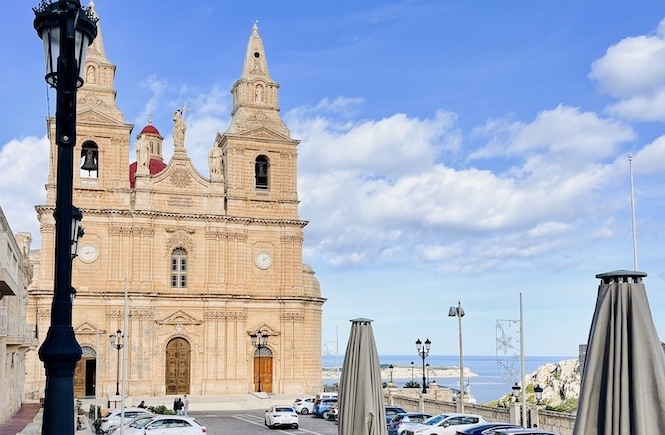
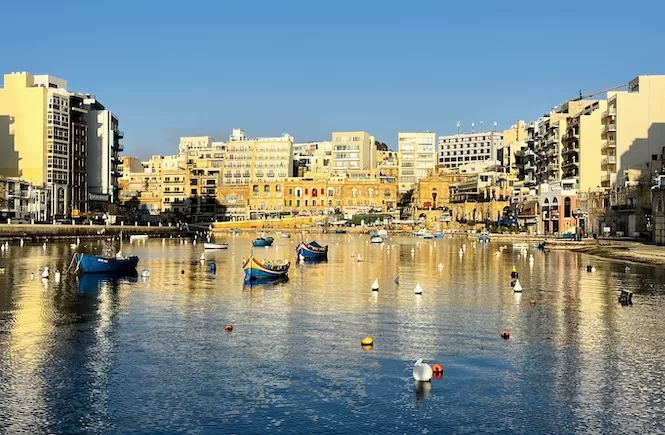
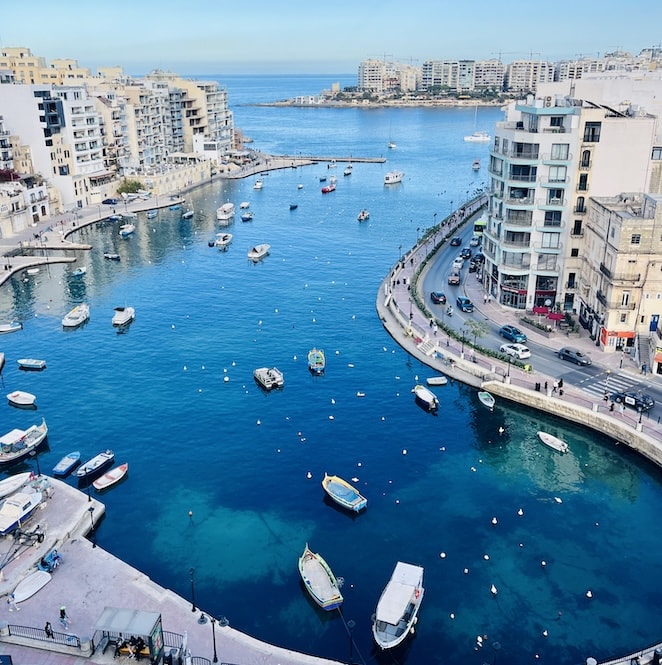
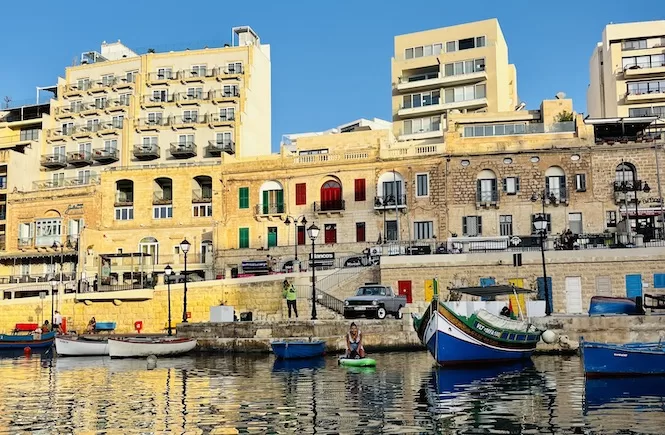
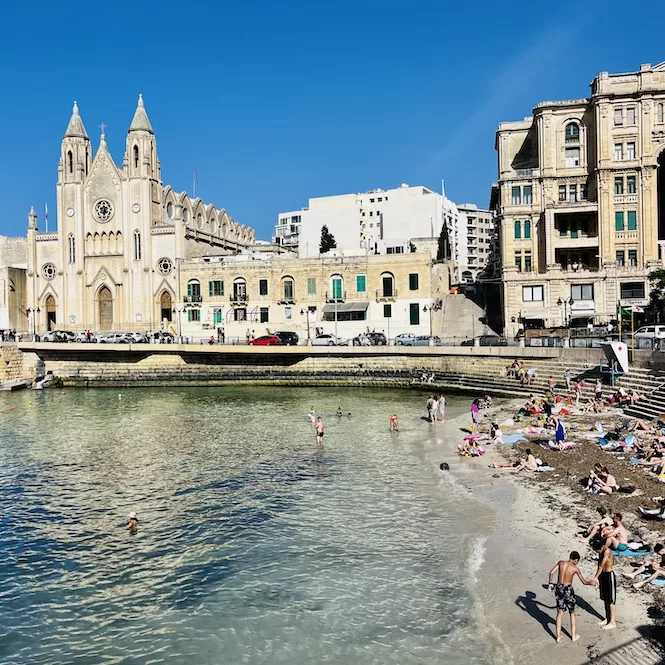
Spinola Bay is the heart of it: a small harbour with traditional luzzu fishing boats, surrounded by restaurants and cafes, with the Love monument on the waterfront. It’s the prettiest part of town and my favourite. Balluta Bay, a short walk away, has a small sandy beach, an impressive neo-Gothic church, and a cluster of Art Nouveau buildings.
St Julian’s is one of the stops in my 7-Day Itinerary
I’ve mapped out exactly when to visit St Julian’s alongside the rest of Malta – with clear routes, best visit times, location links, restaurant tips, and zero stress.
Get the guideThen there’s Paceville, which sits behind and above Spinola Bay. This is Malta’s main nightlife district and a completely different atmosphere from the rest of the town: louder, busier, and at its most intense on weekend nights.
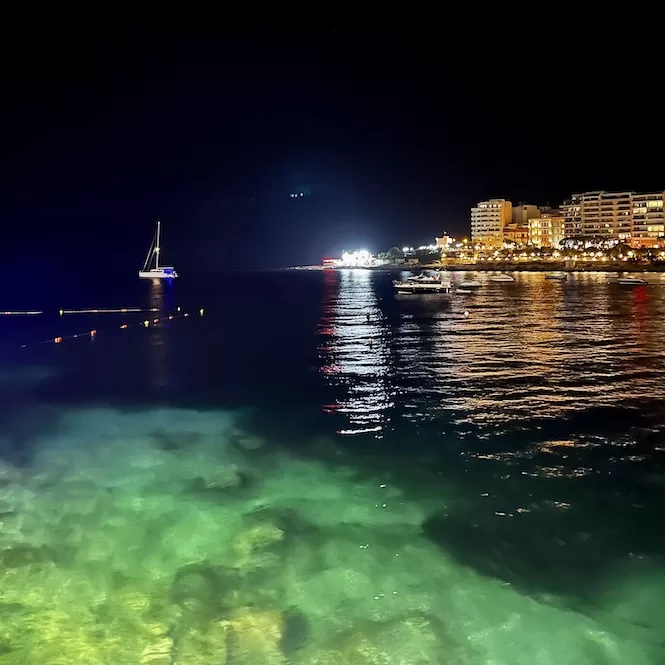
The promenade connects everything and keeps going south all the way to Sliema. That stretch of seafront is what makes St Julian’s special for me.
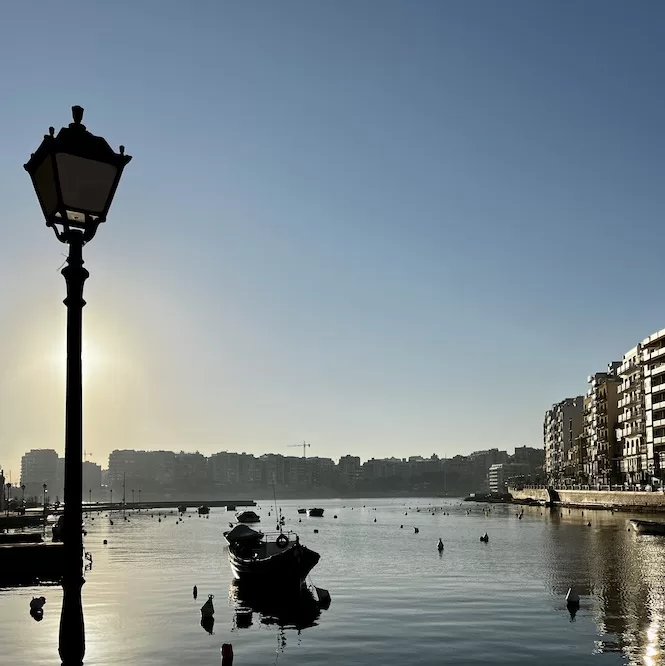
The promenade: the best reason to stay here
The promenade runs from the Love monument at Spinola Bay all the way to Sliema, and then continues along the waterfront facing Valletta on the other side. If you follow it properly, you can make runs of 10km without leaving the seafront.
It’s flat, it’s by the sea the whole way, and there are cafes and benches along the route if you want to stop. For me personally, this promenade is one of the nicest things about living in this area in Malta.
Start at Spinola Bay early in the morning before the town wakes up, grab a coffee from one of the cafes nearby, and walk towards Sliema. You’ll have it almost to yourself.
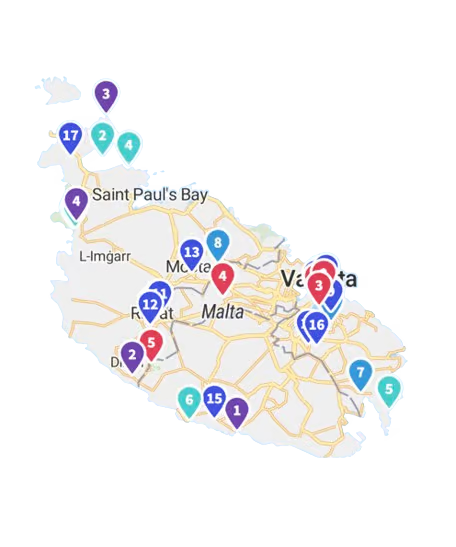
Get a FREE Attractions Map
Planning a trip to Malta, Gozo, or Comino? Get this free interactive map filled with insider tips, Google Maps links, and more.
I want it!Two traditions worth knowing about
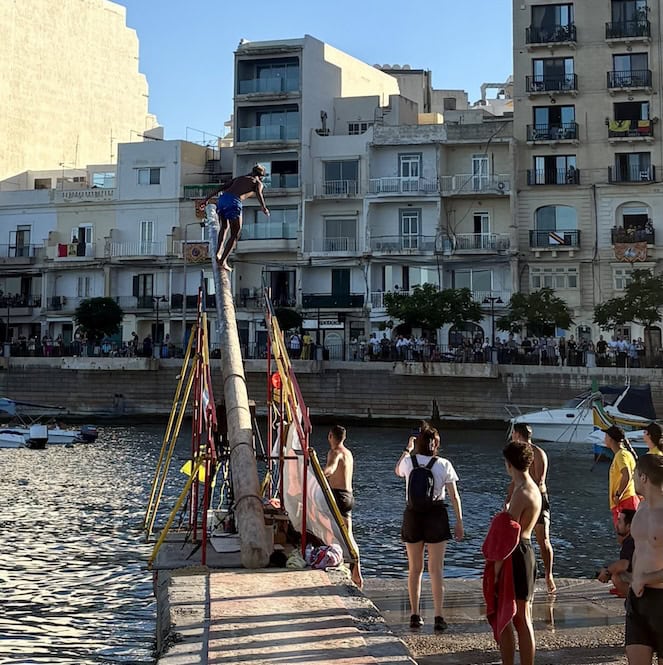
The ġostra: St Julian’s feast is held on the last Sunday of August. The highlight is the ġostra: men run up a long, greased pole over the sea to grab one of three flags at the end. It sounds simple; it is not. Worth seeing if you are in Malta at the end of August.
The Musketterija: During the feast, blank cartridges of black powder are fired from the church roof when the statue of the patron saint is brought out. The tradition is said to date back to when this area was a hunting ground for the Knights of Malta.
Malta’s main nightlife district, which has been the place to go for more than 20 years. It’s crowded, loud, and full of bars. I’ll be honest: it’s not my scene. I prefer somewhere with better music. But if you want to dance and have a big night out, this is where it happens in Malta. You will have fun. Just don’t go expecting sophisticated clubs. Go expecting a loud, lively, busy night, because that is exactly what it is.
If you want drinks without the full Paceville experience, Spinola Bay has nice bars, and you can sit outside by the water. There are also summer venues in the countryside, like Gianpula, which attract better music lineups on Friday and Saturday nights.
Is St Julian’s a good place to stay?
I think so, with one honest caveat.
St Julian’s is central, well-connected by bus, and has more restaurants and cafes than you could work through in a week. The promenade is one of the best things about it. You’re close to the sea at all times and can reach Sliema, Gzira, or Msida on foot. Getting to Valletta by bus takes about 20 minutes. It is a genuinely convenient base for exploring the whole island.
The caveat: it is noisy, especially in summer and especially at weekends. A lot of the accommodation here is short-let Airbnb, which means you can end up with neighbours who have come specifically to party. If you are a light sleeper or travelling with young children, St Julian’s is probably not the right choice. My guide to the best areas to stay in Malta compares all the options.
One practical note: think twice before renting a car if you are staying here. Parking is difficult, with many spots restricted to residents or time-limited. Buses are frequent (though full in summer), and apps like Bolt work well.
If noise does not bother you and you want energy, convenience, and the sea on your doorstep, this is a very good base.
St. Julians hosts most of the islands’ best hotels. If you want a luxury holiday, check out my guide to the top 5-star hotels.
Places to Stay in St. Julian’s
AC Hotel by Marriott: Modern and stylish with an outdoor pool and fitness centre. Book here.
Typical Maltese Maisonette: Spacious and fully-equipped holiday apartment close to the sea. Book here.
Hotel Valentina: Boutique hotel offering a rooftop pool, bar, and grill. Stylish and comfortable. Book here.
Where to swim in St Julian’s
St Julian’s is not really a beach town. There are a couple of sandy beaches, but neither is my recommendation for swimming.
The closest and most convenient rocky beach is near the Happy Dayz bar, where ladders go down into the sea. It’s popular with locals and tourists alike, gets a bit crowded, but the water is clean, and it’s easy to access.
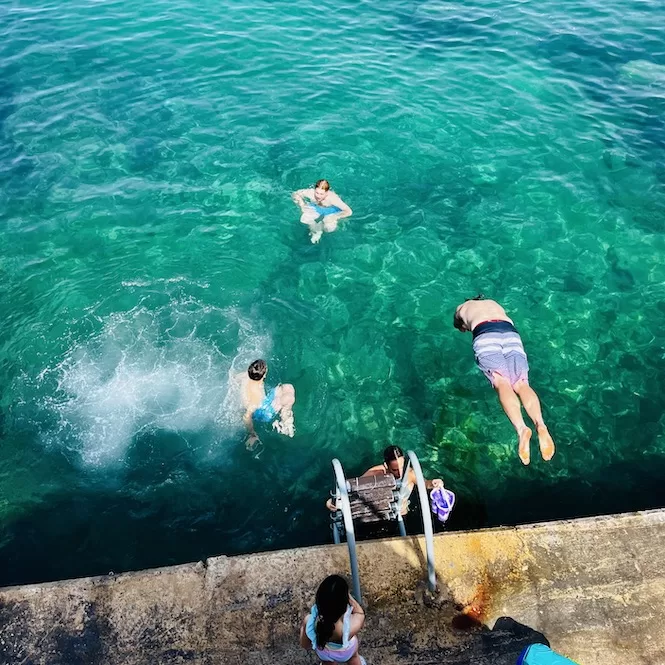
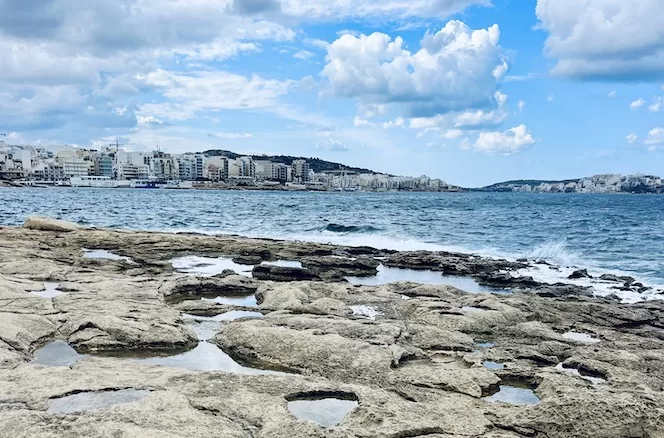
My preference is to walk along the promenade towards Sliema and swim from the rocky waterfront there, close to Exiles. The open sea is wider, more spacious, and cleaner than the inner bays. There are metal ladders along the whole length of the promenade: they are safe, comfortable to use, and get you straight into clean, deep water. That is how locals swim here. Once you get used to it, you won’t miss a sandy beach.
The ones to avoid: Balluta Bay sometimes has water quality issues. I would check for warning signs before getting in. St George’s Bay in Paceville is a sandy beach, but it gets messy, especially in summer when it doubles as an after-party spot at night. I never go there and would not recommend it for swimming.
My honest take on St Julian’s
I have lived in St Julian’s for most of my time in Malta. The promenade, the sea, the cafes, the fact that everything is within walking distance: these things matter to daily life. If I could change one thing, I would make it quieter. The short-let party crowd is real, and it can get hectic in summer. But that’s the trade-off for living somewhere with this much energy and this much sea. Most of the time, I think it is worth it.
How to get to St Julian’s
From Valletta by bus: Several routes connect Valletta to St Julian’s, including routes 12, 13, 14 and 21. Journey time is around 20 to 25 minutes, depending on traffic. Check publictransport.com.mt for current timetables.
From the airport: St Julian’s is about 11km from Malta International Airport. By taxi or Bolt, it takes 20 to 30 minutes. By bus, allow 40 to 50 minutes.
Getting around locally: The promenade connects St Julian’s to Sliema on foot (about 20 minutes walking). From Sliema, you can take the ferry to Valletta.
Where to eat in St Julian’s
St Julian’s has more restaurants than most towns in Malta, ranging from tourist-trap seafront places to genuinely good spots that locals return to.
Salumeria Gardens: Authentic pizzas, fresh beers, and a peaceful garden to eat in. Good selection of local craft beers. One of my regulars.
Two Buoys: Australian-run place with excellent brunch food and a great view of Spinola Bay. Worth the queue at weekends.
Club Sushi: Small place serving sushi and Korean dishes. Takeaway available if you can’t get a table.
Bianco’s: Pizza place in Spinola with pasta, burgers, and fish too. The truffle calzone is one of the better dishes you’ll find in St Julian’s.
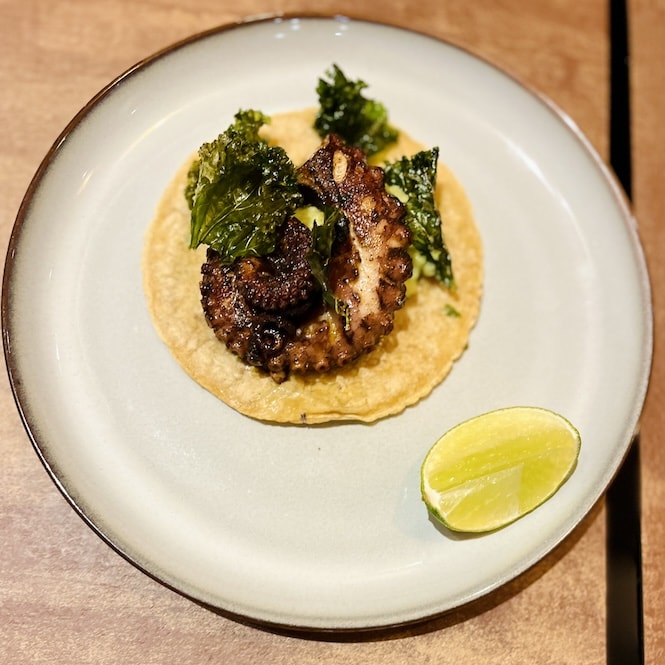
Taco Bar: Authentic Mexican run by a Mexican chef. The tacos are the real thing: try the octopus. Good tequila and mezcal list too.
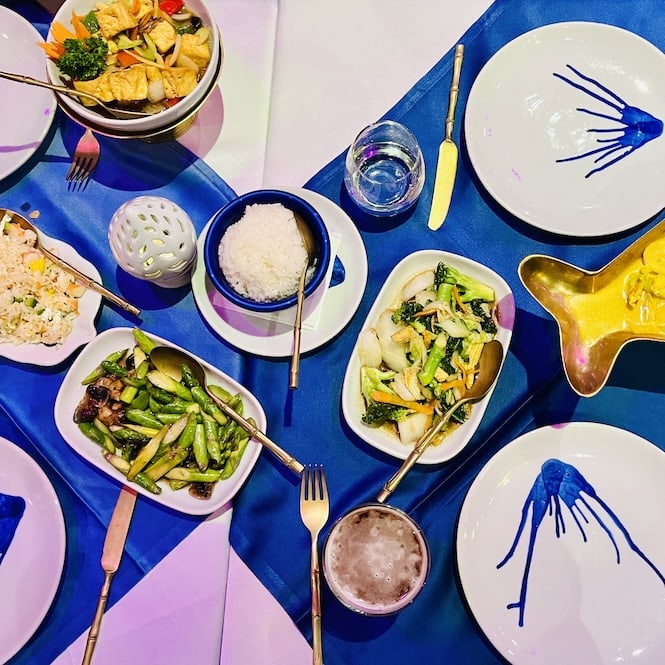
Blue Elephant: Upscale Thai in Portomaso with a beautiful interior, koi fish and all. Pricier than most places in Malta, but the food is genuinely good. I had the fish curry and pad thai with prawns, and both were excellent.
St. Julians, Malta: FAQ
Still choosing where to stay? My Malta trip-planning guide compares St Julian’s with Sliema, Valletta and Gozo.