Just a quick heads up – some of the links I share on this site are affiliate links. That means if you click on one and make a purchase, I may earn a small commission at no extra cost to you. Your support through these links helps me create valuable content.
Most packing guides for Malta tell you to bring sunscreen and flip-flops. That’s fine for July. But I’ve lived here since 2011 and I’ve seen people arrive in January in a light cardigan, completely unprepared for what Malta’s winter actually feels like.
Written by Laura Jasenaite, Malta travel expert with 15+ years living on the islands.
Here’s the thing nobody tells you: Maltese buildings don’t have central heating. Apartments are heated by AC on heating mode or electric heaters, which means indoors can be colder than outside. On a sunny winter day, it genuinely feels warmer to go for a walk than to sit in your flat. Pack warm socks and a jumper regardless of what the weather forecast says.
Quick Essentials Checklist:
- Documents: Passport or ID card, driver’s licence (IDP for non-EU visitors)
- Money: No-fee card (Revolut recommended), small coins for parking attendants
- Tech: UK Type G plug adapter, power bank
- Weather: Windproof umbrella (not a regular one), sunscreen SPF 50+
- Shoes: Non-slip soles – Maltese limestone pavements get dangerously slippery when wet
- Health: Reusable water bottle, basic medications, insect repellent (spring/autumn)
- Apps: Bolt or eCabs (taxis), Tallinja (buses)
What most people get wrong about packing for Malta
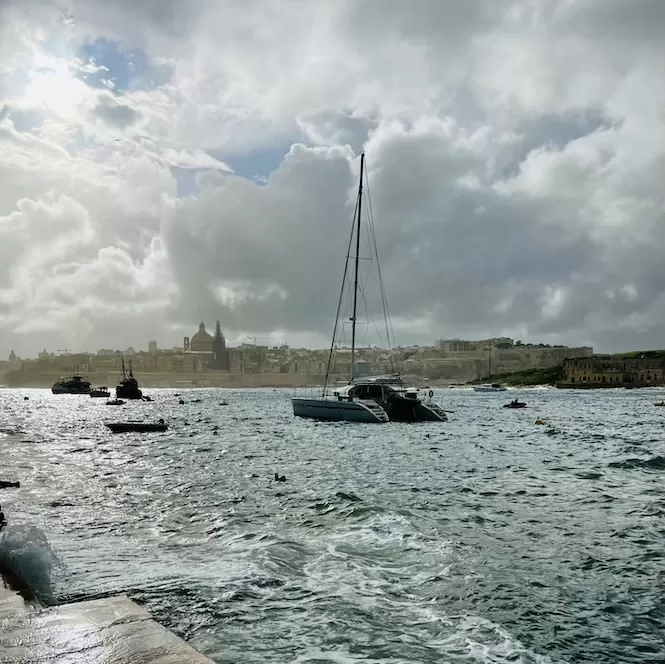
In winter, people underpack for the cold. Malta has a reputation as a warm destination, which is true in summer. But from October through April, it can be genuinely cold, humid, and windy. If it rains, it does not drizzle the way it does in northern Europe. It rains hard.
And because the buildings have no central heating, indoors often feels colder than outdoors. A puffer jacket for evenings, warm socks, and a jumper for indoor use are not optional in winter.
Don’t have time to plan every detail?
I’ve already done it for you. Get my complete 7-day Malta itinerary with routes, timings, and local tips included, so you can enjoy the islands stress-free.
Get the guideIn summer, people bring too many clothes and the wrong shoes. July and August are hot during the day and hot at night. You do not need a jacket, except for the air-conditioned plane.
What you do need are shoes with grip. Maltese limestone pavements become genuinely slippery when wet, and I have slipped and fallen more than once. Flip-flops on the steeper side streets are not safe, especially if you are doing long days of walking or have any mobility concerns.
The non-negotiable essentials
Passport or ID and copies
Keep a photo of the data page of your passport stored in your email. If you lose it, this makes the embassy process significantly less painful. Make a colour photocopy too and keep it separately from the original.
A no-foreign-transaction-fee card
Check your bank’s rates before you go. Card payments are accepted almost everywhere in Malta, including at most market stalls and food trucks. Revolut is what I use in Europe – zero currency exchange fees and widely accepted. Most local vendors now take Revolut transfers via QR code even if they do not have a card machine.
You will need coins for one specific thing: tipping the parking attendants, if you are renting a car. Keep a few euro coins set aside for this.
Driver’s licence
EU and UK licences are accepted. For visitors from the US, Australia, and other non-EU countries, an International Driving Permit is mandatory for car hire.
Travel insurance
I use Visitors Coverage and have found it reliable. Medical cover is the obvious reason, but flight delays and lost luggage add up quickly. It is worth having.
Tech
UK Type G plug adapter
Malta uses UK-style three-pin sockets. USB-C wall sockets are rare. If you have an adapter at home, pack it. Buying one in a Maltese shop wastes time you could spend somewhere better.
Power bank
You will take a lot of photos here. Your phone battery will not last a full day of sightseeing. A power bank means you are not hunting for a plug at lunchtime.
eSIM for data
No need for a physical SIM card. Buy data through an eSIM provider before you travel, activate it with a QR code, and your main number handles calls and WhatsApp while the eSIM handles data. Revolut offers eSIM top-ups if you already use the app.
Noise-cancelling earplugs or headphones
Malta’s village feasts involve fireworks. They can start at 8am. If you are staying near a parish church at feast time, you will hear them through the walls. Earplugs are not optional if you want to sleep past sunrise during feast season (May through September, primarily).
Windproof umbrella
A regular umbrella inverts in Malta’s wind in seconds. I have seen garden furniture fly off roof terraces in a storm. Either buy a windproof umbrella specifically, or pack a heavy waterproof jacket instead. Do not trust a standard umbrella.
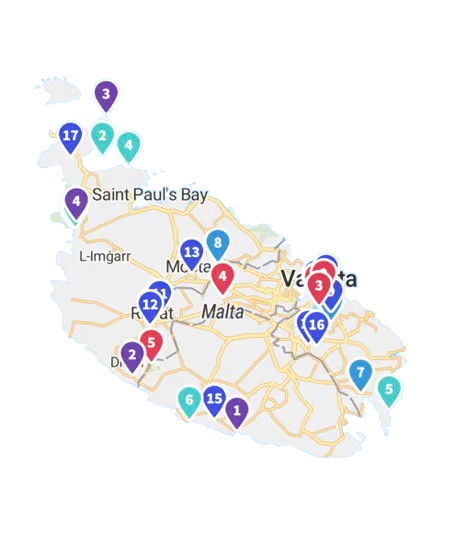
Get a FREE Attractions Map
Planning a trip to Malta, Gozo, or Comino? Get this free interactive map filled with insider tips, Google Maps links, and more.
I want it!Health essentials
Reusable water bottle
You can drink Malta’s tap water. It is desalinated and has a distinct taste that most people find unpleasant, but it is safe. Most hotels have water stations for refilling. A filter bottle solves the taste issue entirely. Staying hydrated in summer is not optional – the heat is intense and shade is limited in many places.
Sunscreen SPF 50+
The UV index in summer reaches 12. The winter sun is also stronger than most northern Europeans expect. I wear sunscreen on my face year-round. Pack it rather than buying it here: sunscreen is available everywhere in Malta but prices are higher than you would pay at home.
Sunglasses
Year-round, not just summer. The limestone buildings reflect light intensely even in winter.
Insect repellent
Late spring and October are the main mosquito periods. Pack it or buy it when you arrive – pharmacies and supermarkets stock it.
Basic medications
Headache tablets, stomach remedies, antihistamines. Pharmacies are easy to find in most towns but are closed on Sundays. There is a rotating Sunday roster that you can check at medicinesauthority.gov.mt. Buy anything you might need on a Saturday evening if you are staying over a weekend.
Need advice on renting a car in Malta? Here’s my guide with insider tips on everything you need to know.
Apps to download before you fly
Bolt, eCabs, or Uber are all worth having installed before you land. It depends where you are going and what time. Buses and taxis are in the same traffic, so you cannot avoid delays during busy periods. That said, I would use a cab at night when bus frequency drops, or when there is no direct bus and the connection would cost more time than the fare. For daytime sightseeing on the main routes, the bus network covers most of the island and is significantly cheaper. Download the Tallinja app for schedules and route planning before you arrive. For a full breakdown of getting around, my guide to getting around Malta covers everything.
A note on planning the rest of your trip
Once you have sorted what to pack, the next question is always where to actually go. Most people spend the first day or two figuring out the island, which is fine, but it does eat into the time you came for. I put together a 7-day Malta itinerary that handles the routes, the order, and the timings, so you can arrive knowing exactly where you are going on day one. Less planning. More Malta.
Frequently Asked Questions
Planning the rest of your trip? My Malta travel guide for first-timers covers how many days you need, where to stay and how to get around.