Just a quick heads up – some of the links I share on this site are affiliate links. That means if you click on one and make a purchase, I may earn a small commission at no extra cost to you. Your support through these links helps me create valuable content.
Mdina, Malta’s ancient walled capital known as the Silent City, can feel like a very beautiful museum during the day. The streets are empty of real life. No locals doing their shopping, no kids, no sense that anyone actually lives here.

Written by Laura Jasenaite, Malta travel expert with 15+ years living on the islands.
Just tour groups moving through the extraordinary medieval architecture they’ve come to photograph. It’s worth seeing. But it’s not the real experience.
Come in the evening. That’s when the tour groups are gone, and the silence is actual. The narrow streets, the thick medieval walls, the light on the limestone: all of it lands differently when there’s nobody rushing past you. Mdina earns its name at dusk, not at noon.
One thing to plan around: if you want to visit the museums or the Cathedral, they close at 4.30 pm, so you’ll need to arrive during the day. I suggest timing it so you do the indoor attractions in the afternoon, then stay on into the evening when the city empties and the streets become yours.
This guide covers everything you need for a self-guided walking tour of Mdina: what to see, what to skip, the best time to visit, and how to get there.
Practical information
- Getting there by bus: Routes 51, 52, 53 from Valletta stop just outside the main gate at Rabat. Journey ~30 mins from Valletta.
- Parking: Public car park at the Mdina entrance or Il-Foss (the ditch). Keep €1–€2 coins for parking attendants.
- Entry: Mdina itself is free. Cathedral + Museum combo ticket ~€10–€15. Palazzo Falson entry ~€10 (audio guide included). Mdina Dungeons ~€10.
- Best time to visit: After 6pm in summer. Weekday mornings in shoulder season (Oct–Nov, Mar–Apr).
- Accessibility: Mostly flat but cobblestones can be difficult for wheelchairs and pushchairs.
- How long to spend: 2–3 hours for a relaxed walk. Half a day if combining with Rabat.
What is Mdina, and why do people visit?
Mdina is one of the oldest walled cities in the world. Only around 300 people live inside its walls today, but for centuries, it was Malta’s capital, the place where the island’s nobility lived and where political power was held.
People come for the architecture, for the views across Malta from the bastions, and increasingly for the Game of Thrones connection (the Mdina Gate was used as King’s Landing in Season 1). But the real reason to visit is simpler: there’s nowhere else in Malta that looks or feels like this.
Mdina is one of the stops in my 7-Day Itinerary
I’ve mapped out exactly when to visit Mdina alongside the rest of Malta – with clear routes, best visit times, location links, restaurant tips, and zero stress.
Get the guideA brief history: from Phoenicians to the Knights
People have lived on Mdina’s land since ancient times. The Phoenicians built a city here called Maleth. The Romans renamed it Melite. After an Arab invasion in 870, the city was rebuilt and redesigned.
The name Mdina comes directly from the Arabic word medina, meaning city. When the Knights of St John arrived in 1530 and moved Malta’s capital to Birgu, the nobility stayed in Mdina, which is partly why it’s preserved so well. The great earthquake of 1693 brought down many buildings; most of what you see today, the Baroque palaces and Cathedral, was rebuilt in the years that followed.
What is the best time to visit Mdina?
This depends on what you want to do.
If you want to visit the museums or the Cathedral, you need to arrive before 4.30 pm. I suggest arriving around 2 pm: you’ll catch the tail end of the tour groups, but you’ll have enough time to do one or two of the indoor attractions before they close.
Then stay on. Because from around 6 pm, once the groups have cleared out, the city becomes a completely different place.
The streets go quiet in the way the name promises. You can wander, take photos, sit on the bastion walls and watch the light change over most of Malta. That version of Mdina, the evening version, is the one worth coming for.
Mdina walking tour: a self-guided map
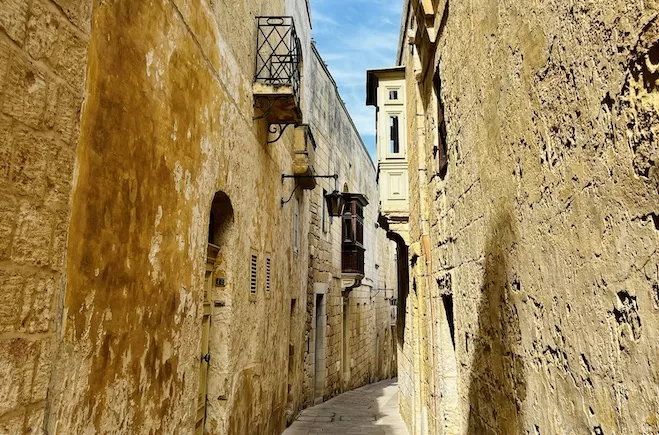
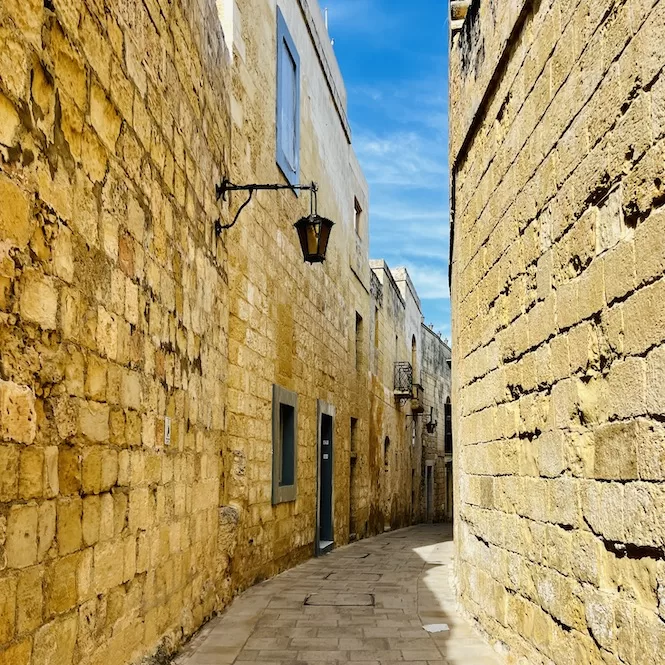
Are you ready for a tour? In Mdina, you will see old houses full of charm. Look at the windows and doors. They’re painted in bright, bold colours. Each one is different. You’ll see blues, reds, yellows, and greens. And the streets are so small you can touch both sides.
This city is amazing – full of history and friendly people. Don’t rush. Enjoy every moment of your walk in the Silent City of Malta.
Here’s a map for a self-guided walking tour. Click on the pins for more information.
Do you prefer a guided tour? Book one using this link.
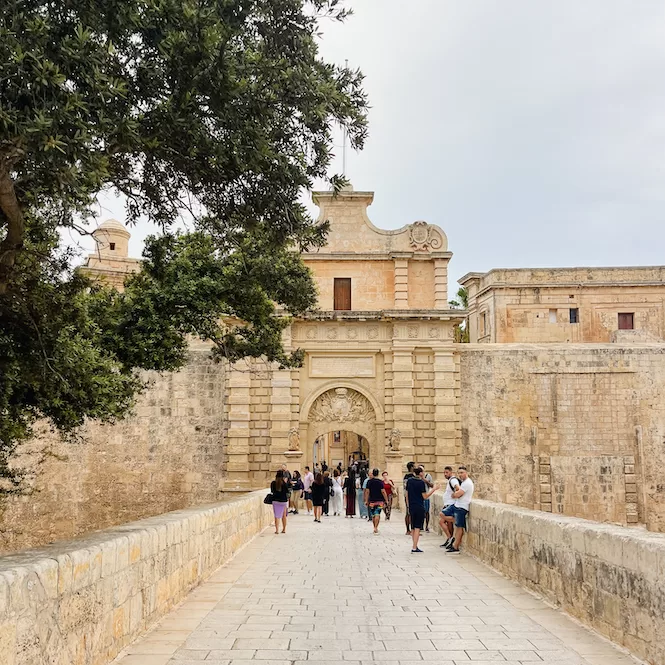
Mdina Gate
The main entrance to Mdina is a Baroque limestone gate built in the early 18th century, commissioned by Grand Master António Manoel de Vilhena.
The coat of arms of both Mdina and de Vilhena are carved into the facade, along with a Latin inscription. Stone lions flank the bridge leading up to it.
If it looks familiar, that’s because it appeared in Game of Thrones Season 1 as the entrance to King’s Landing, specifically in the episode where Catelyn Stark and Ser Rodrik enter the city.
You’ll see horse carriages (Karozzin) parked outside. I personally don’t use them because the horses stand in the summer heat for long stretches, but they’re available if you want one.
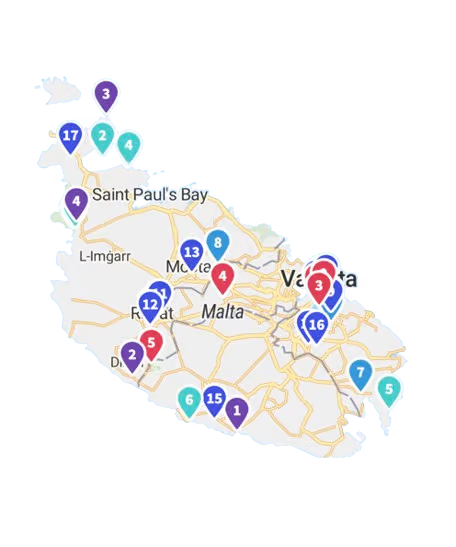
Get a FREE Attractions Map
Planning a trip to Malta, Gozo, or Comino? Get this free interactive map filled with insider tips, Google Maps links, and more.
I want it!The architecture of Mdina: what you’re actually looking at
What makes Mdina different from anywhere else in Malta is that many of the buildings here are genuinely medieval. Small windows, thick walls, built to keep heat out and invaders in.
When I walk these streets, I find myself trying to imagine the people who lived here in the Middle Ages: clothes drying from those narrow windows, kids running across the same limestone slabs you’re standing on now. It gives you an odd feeling. It looks like a firm, but people have lived it here for centuries, and 300 of them still do.
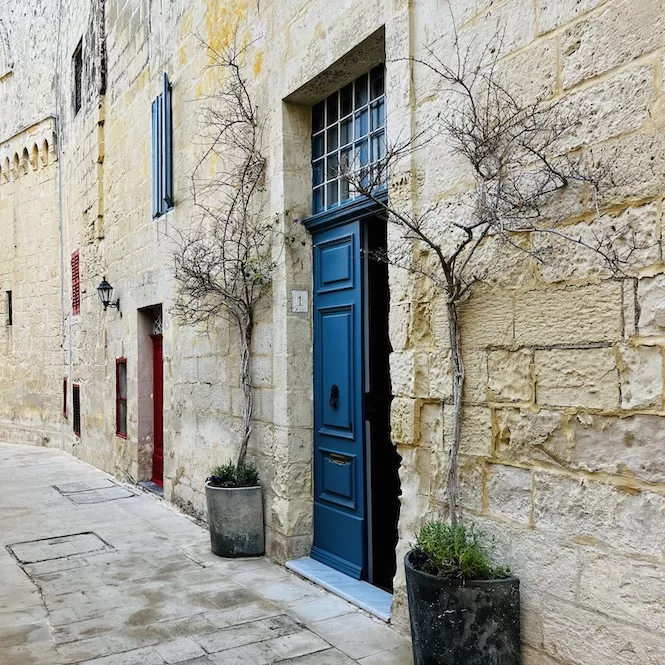
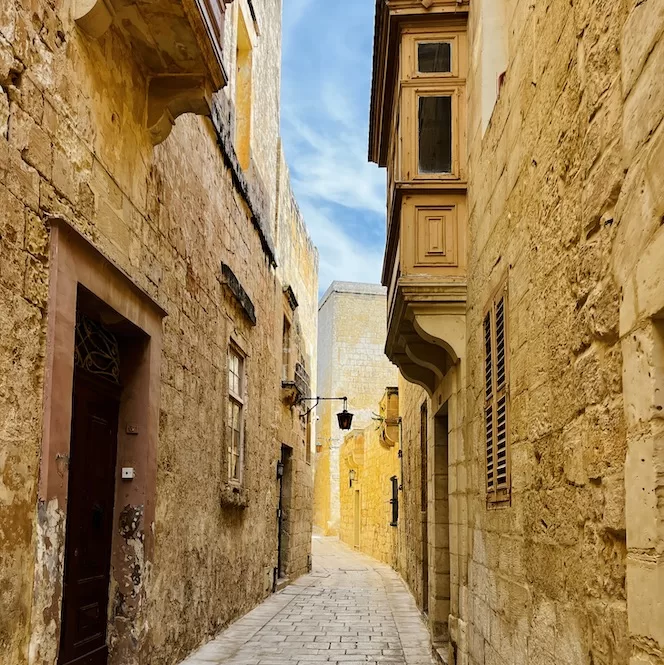
The streets are so narrow in places that you can touch both walls at once. Look at the doors and windows, painted in blues, reds, yellows, and greens, each one different.
The Mdina Dungeons Museum
The Mdina Dungeons Museum is our next stop (refer to point 2 on the map). In this museum, you’ll learn Malta’s scary stories from Roman times to the Knights and Napoleon.
Is it scary? Honestly, it’s more fun than frightening. Worth 30 minutes if you enjoy that style of attraction. Younger kids might find some of the figures intense.
Mdina Cathedral Museum and St Paul’s Cathedral
Next, visit Mdina’s Cathedral Museum. On the Mdina walking map, it’s labelled as number 5.
These two go together. You buy a combination ticket at the Cathedral Museum, which covers both. Buy it at the museum first, not at the Cathedral door.
The museum is better than it sounds. More than 60 prints by Albrecht Dürer, silverware, ancient furniture, and paintings: you can easily lose an hour in there.
St. Paul’s Cathedral is named after St. Paul the Apostle (point 6 on Mdina’s walking map). It was built in 1702 after the earthquake destroyed the earlier 12th-century church. The interior is Baroque, with marble tombstones covering the floor, similar in feel to St John’s Co-Cathedral in Valletta, but quieter and less crowded.

Fontanella Tea Garden
Our next stop is Fontanella Tea Garden (see point 7 on the map).
Fontanella is the most famous café in Mdina, and the chocolate cake has real history. When I moved to Malta in 2011, people would come here and proudly tell you they’d got cake from Fontanella: it was considered the best cake shop on the island. It’s still good.
The view from the bastions is one of the best in Malta, and that alone is the reason to go. But Mdina has more dining options now than it did fifteen years ago, and the reputation brings more people than the place can comfortably handle. Service can be slow.
Go for the view. Have the cake if you want. But if there’s a queue and you’d rather skip it, see the note on Gustav Café below.
Palazzo Falson and the rooftop café
Palazzo Falson is a museum in a house that dates to the 1200s. The last private owner, Olof Gollcher, was a collector. The house is full of furniture, jewellery, paintings, and objects from different periods and places. An audio guide is included, and the staff are genuinely helpful. Worth it if you enjoy that kind of layered, personal history. You can get your entrance ticket here.
Insider Secret: There is a hidden cafe on the roof called Gustav Café. You typically do NOT need to pay the museum entrance fee to visit the cafe, just ask the staff at the door! It’s a perfect quiet alternative to Fontanella.
Bastion Square
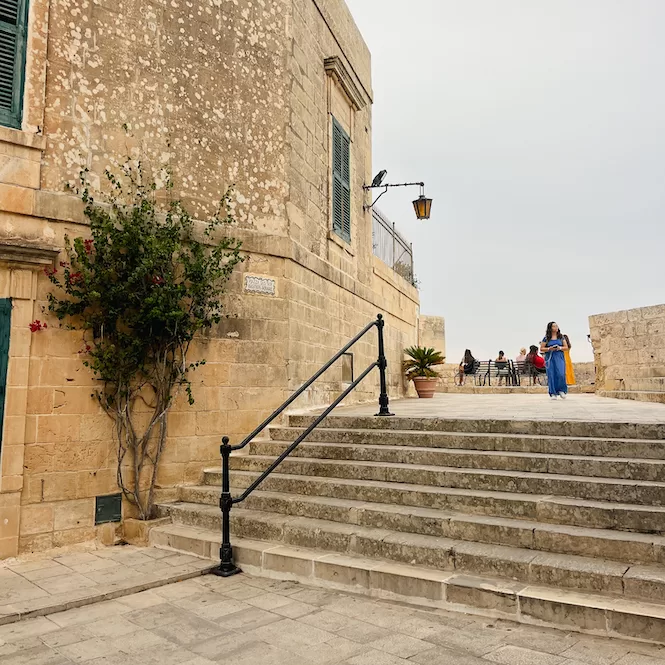
Bastion Square (no 9 on the Mdina map) looks out over most of Malta from the city walls: Valletta, the Mosta Dome, and the full spread of the island below you. On a clear day, it’s one of the best views in the country.
For me, this is the real reason to come to Mdina. Not a specific museum or a Game of Thrones location: just this view, in the late afternoon, when the light is doing something interesting, and you have no particular reason to leave. If you’re staying into the evening, you end the walk here. There’s no better place to watch the sun go down over Malta.
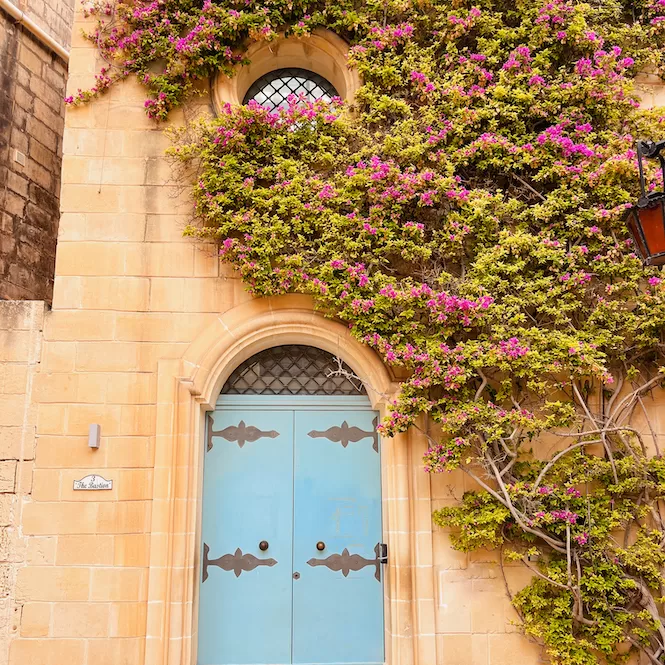
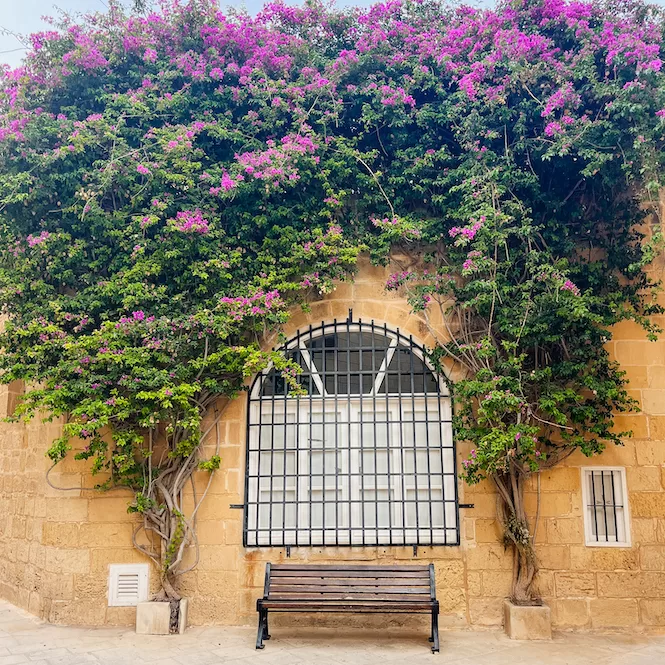
On the way to the next stop, you’ll pass some of the most photographed spots in Mdina: the blue door with flowers on the wall, the bench surrounded by blossoms in spring.
The Knights of Malta Museum
The Knights of Malta Museum is next on our walking tour (refer to point 10). In this museum, you will see a video show that lasts 30 minutes. Then there’s a puppet show that’s just as long.
The museum shares stories about the Knights of Malta, including how they defeated the Turks. You can also learn about knights’ grand adventures. And you can also learn about the different Grand Masters. They each did their own thing. Some loved coins. Others were into science. You can see all these interests on their coat of arms.
Pjazza Mesquita
Lastly, visit Pjazza Mesquita in Mdina. It’s marked as number 11 on the map.
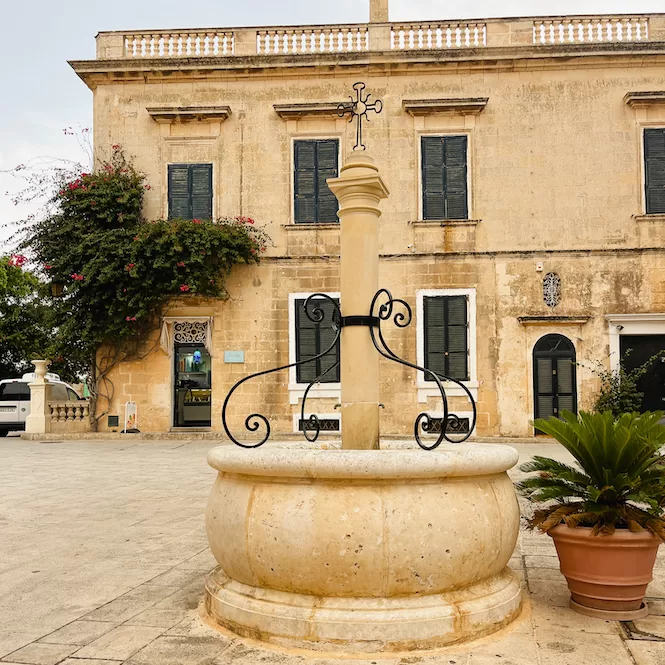
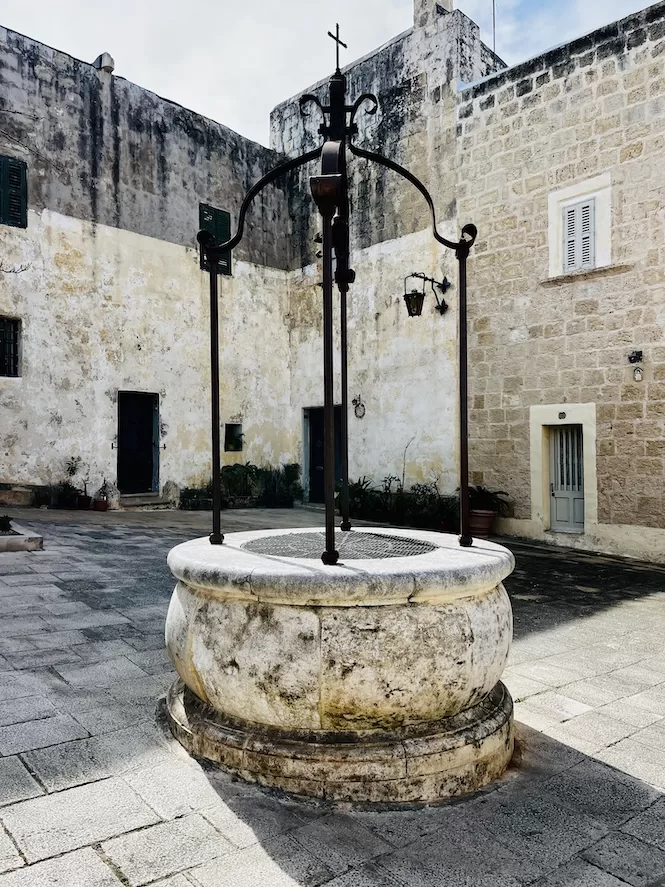
Pjazza Mesquita is a quiet square with an old well in the centre, set just off the main tourist route. It’s usually noticeably quieter than the main street and good for photos without crowds.
For Game of Thrones fans: this is where the fight between Ned Stark and Jaime Lannister was filmed in Season 1. The square also served as the location of Littlefinger’s brothel in the same episode.
Howard Gardens in the Silent City of Malta
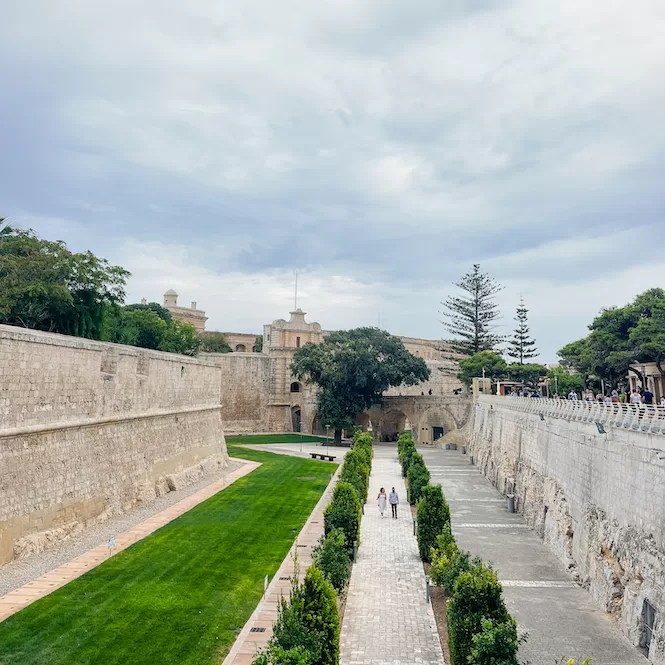
As the walking tour ends, Howard Gardens is a good place to sit while waiting for your bus or taxi. The park opened in 1942 and is named after Malta’s first Prime Minister, Joseph Howard.
Within the gardens, you can find the remains of the ancient Roman city of Melite, and a column marking where a medieval church once stood. There are benches, kiosks selling snacks, and a clear view back up to the walls of the Silent City.
That’s the end of our tour in Mdina, Malta’s Silent City. You’ll feel like you’ve travelled back in time. Many more sights, stories, and secrets await. Don’t miss out!
If you prefer a guided walk, why not book a tour? See if one’s available and book it.
Practical Info when Visiting Mdina
Parking: Parking is tough. Try the public car park at the Mdina entrance or the ditch (Il-Foss). Tip: Always keep some €1 or €2 coins to tip the parking attendants.
Accessibility: Mdina is mostly flat, but the cobblestones can be bumpy for wheelchairs and strollers.
Want to see more than just Mdina? Most tourists miss the best spots because they run out of time. I’ve created a complete 7-Day Malta Itinerary that organises your days logically, so you don’t spend your holiday stuck on a bus.
Want to see how Mdina fits into the whole island? See my first-timer’s Malta travel guide.